 PhysicsBowl
Two things are true about PhysicsBowl 2027 at the same time, and they come from two different sources. From AAPT, the organiser: nothing yet — as of early September its pages still show the 2026 season, and this site does not publish a 2027 date before AAPT does. From the China organising channel: the new season’s assisted registration has opened, and — the change that matters — online seats are being discontinued, leaving offline sittings only. Add one more data point from our own records: the 2026 season closed with our cohort taking 39 Super Gold, 31 Gold, 42 Silver and 37 Bronze awards in the China-region bands. Here is how to read all three without mixing them up.
The status board: published, signalled, unknown
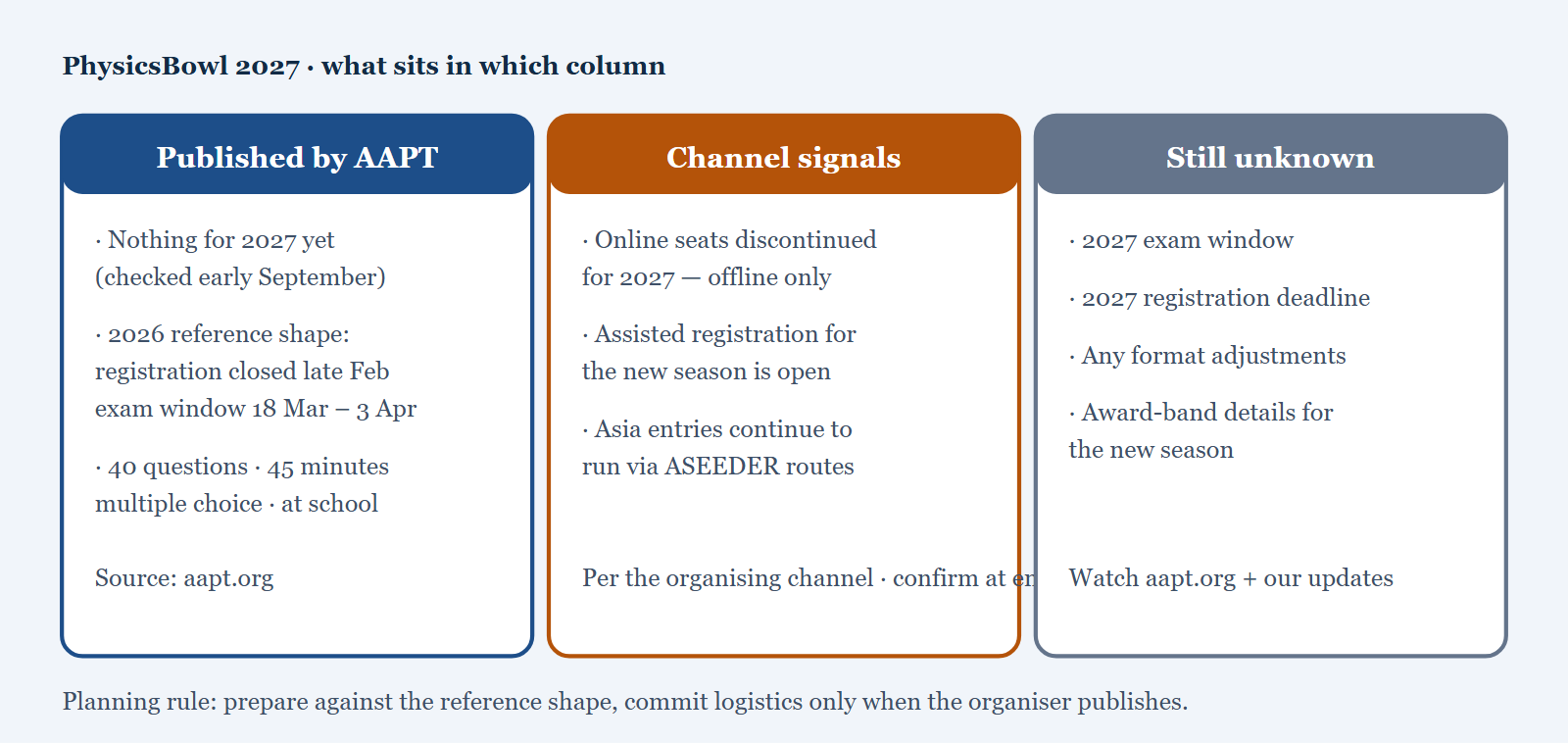
The offline-only signal deserves a moment, because it changes logistics rather than physics. In recent seasons some China-based candidates sat online-monitored versions; per the channel’s notice, that door closes for 2027, and every candidate sits in person — which for PhysicsBowl means at a school sitting under school supervision, the format AAPT’s rules have always described. If your school has not hosted before, the conversation with your physics teacher should happen this autumn, not in February; our guide to how entry runs through ASEEDER explains who arranges what, and the rules page covers supervision requirements. As always with channel-level information: confirm the details at entry, and treat aapt.org as the final word once it speaks.
What the 2026 record says — and how to read award bands honestly
Our 2026 cohort closed the season with 39 Super Gold, 31 Gold, 42 Silver and 37 Bronze awards. Two clarifications so this number means something rather than just sounding good. First, these are our own aggregate records, de-identified, not an official statistic. Second, the band names are the China-region organiser’s award structure — Super Gold and the national tiers are how the regional organiser recognises performance across the China field; AAPT’s own recognition runs separately on the global results. Band definitions can shift season to season, so confirm the current season’s structure at registration rather than assuming last year’s.
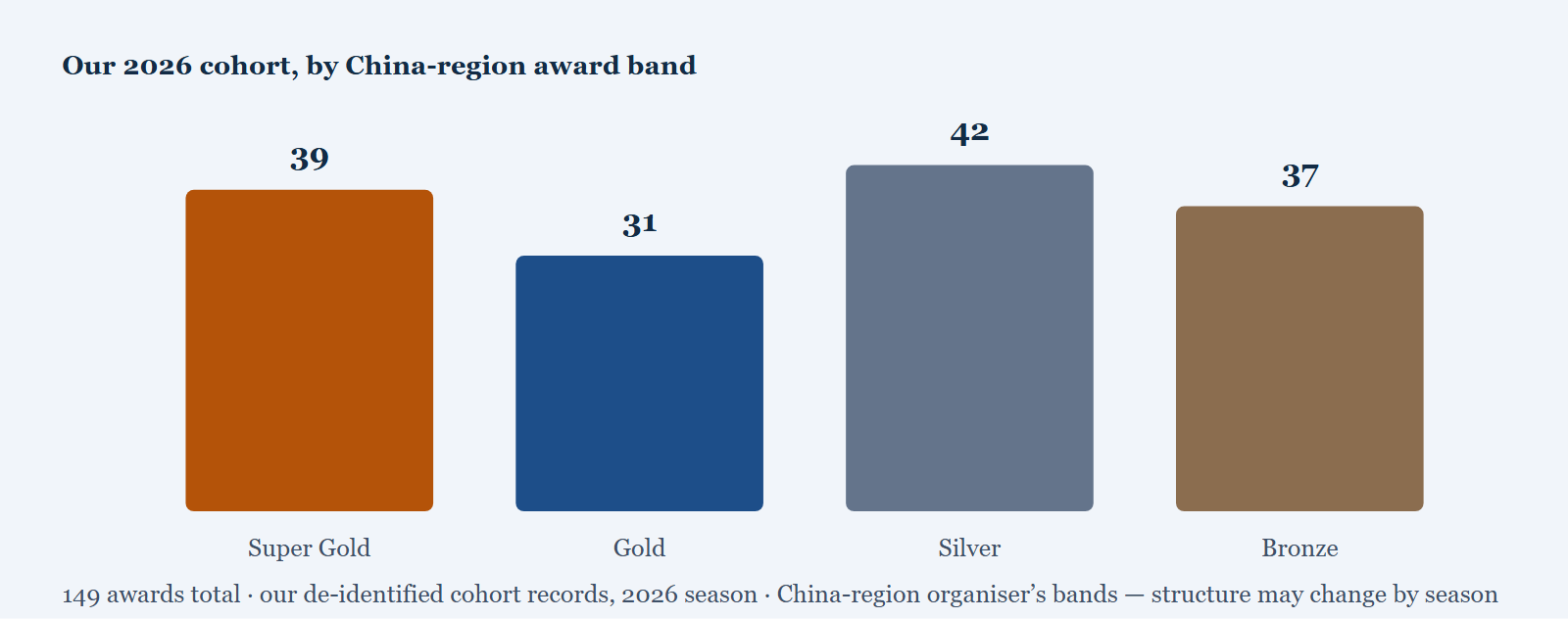
What we take from the shape of that distribution, wearing our coaching hat: the wide spread across all four bands reflects the range of starting points in the cohort, and the strong top band tracks one variable more than any other — when preparation started. Students who began in the autumn had two full passes through the syllabus before the spring window; students who joined after the winter holidays had one hurried one. That is an observation from our own teaching records, not a law, but it is why our September-to-contest stage plan is built backwards from a spring sitting, and why this article exists in September rather than January.
What to actually do this month
Three moves, none of which require AAPT to have spoken. First, settle your division early — Division I or II is a course-history question you can answer today, and it sets the depth of everything that follows. Second, have the school conversation: with online seats gone per the channel’s notice, an in-person sitting needs a supervising teacher and a room, and autumn is when that gets agreed. Third, start the syllabus work against the reference calendar — a late-winter deadline and a spring window have been the stable shape of recent seasons, and preparation keyed to that shape survives any reasonable 2027 announcement. When AAPT publishes the real dates, we will cover them; until then, the runway is yours to use.
Frequently asked questions
Has AAPT announced PhysicsBowl 2027 dates?
No. As of early September 2026, AAPT’s pages still show the 2026 season, and this site does not publish a 2027 date before AAPT does. For planning shape only: the 2026 season’s registration deadline fell in late February and the exam window ran 18 March to 3 April.
Is PhysicsBowl really going offline-only in 2027?
That is the China organising channel’s notice: online seats are discontinued for the new season, leaving in-person sittings only, with its assisted registration already open. It is channel-level information — confirm at entry, and treat AAPT’s own publications as final once they appear. In-person sitting means a school sitting under school supervision, as AAPT’s rules describe.
What are Super Gold and the other bands in your 2026 results?
They are the China-region organiser’s award bands, used to recognise performance across the China field; AAPT’s own recognition runs separately on global results. Our 2026 figures — 39 Super Gold, 31 Gold, 42 Silver, 37 Bronze — are our own de-identified cohort records, not an official statistic, and band structures can change by season.
When should preparation for 2027 start?
Now, in our teaching team’s view. The clearest pattern in our 2026 records is that autumn starters fit two full syllabus passes before the spring window while late starters managed one. Begin with the division decision and the topic audit, and key the plan to the reference calendar until AAPT publishes the real one.
AAPT-published facts are as listed at aapt.org; 2027-season signals are per the China organising channel’s notices and should be confirmed at entry. Cohort results are our own de-identified records for the 2026 season, reported in the China-region organiser’s award bands. Corrections within 7 working days of notice.