How Can Chinese Students Register for the 2026 Physics Bowl? What are the Core Preparation Tasks for Grades 10-12? Why is Strongly Recommended to Prepare with a Professional Teacher?

The Physics Bowl provides a platform for students to showcase their physics knowledge while paving the way for admission to top universities. Prestigious schools like Harvard, Yale, MIT, Oxford, and Cambridge highly recognize students with excellent performance in the Physics Bowl. This is why more and more students are choosing to sign up for the 2026 Physics Bowl to pave their way in STEM fields.

推荐

I. Quick Overview of 2026 Physics Bowl Key Information

Item Content
Organizer American Association of Physics Teachers (AAPT)
Officially administered in China by ASDAN China
Eligibility Global high school students in Grades 10–12. Individual competition, no lab component.
Language Full English test paper
Format 45 minutes, 40 multiple-choice questions
✅ Correct: +1 point ❌ Incorrect/No answer: 0 points (no penalty)
Divisions Division 1 (D1): Q1–40. Suitable for Grade 10 and below. Aligns with AP Physics 1 & 2.
Division 2 (D2): Q11–50. Suitable for Grades 11–12. Includes AP Physics C & introductory college physics, significantly higher difficulty.
Exam Date Tuesday, March 17, 2026, 5:00–5:45 PM (Beijing Time)
Registration Deadline Friday, March 6, 2026
⚠️ Recommended to complete registration before Feb 28 for processing & seat confirmation.
Note: Since 2025, the Physics Bowl China exam date has moved from April to mid-March. Do not follow old schedules!

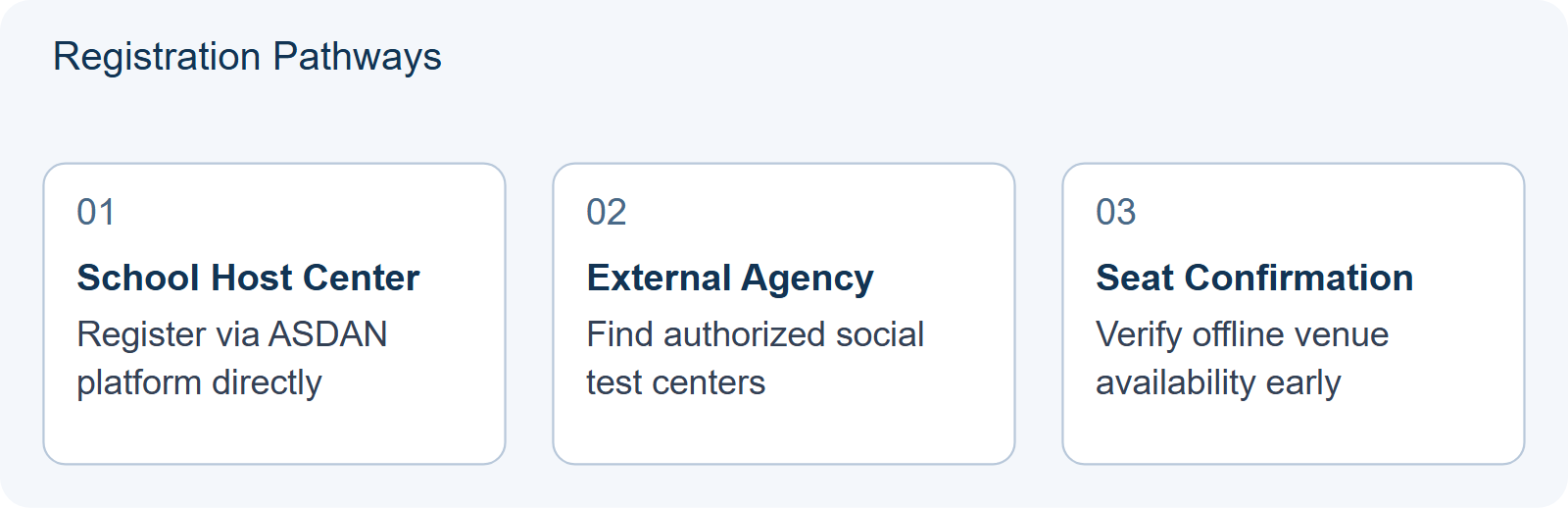
II. Registration Methods (Chinese Students are Limited to the Following Three)

Physics Bowl does not accept direct individual registration with AAPT. Chinese students must use official authorized channels.

Partner School Unified Registration (Preferred)

For: Students at ASDAN partner schools (most international schools, some public school international divisions).

Process: Contact your school's physics teacher/guidance counselor → Submit info per school notice → School handles registration.

Advantage: Standardized process, strong logistical support, no extra fees.

ASDAN Science Mini-Program Online Registration (For Partner School Students Only)

Steps: WeChat search "ASDAN Science Assessment" mini-program → Register → Select "Physics Bowl 2026" → Fill info, choose division (D1/D2), pay fee.

Reminder: Exam seats in popular cities (Beijing, Shanghai, Guangzhou, Shenzhen) are limited. Check availability and secure your spot early!

Authorized Exam Center/Agency Registration (Suitable for Regular High School/Self-Study Students)

For: Regular high school students; Self-study candidates; Students needing systematic tutoring + mock exam support.

Services: Registration + Exam seat arrangement + Pre-competition mock exams + Optional 1v1/small group tutoring.

Note: As an official authorized Physics Bowl exam center, we can provide this registration service.

推荐

III. Grade-Level Targeted Preparation Strategies

Grade 10 (G10 / IB G10 / A-Level AS)

Target: D1 - Aim for global Top 10% (~32+ points). Or attempt D2, ensuring ≥80% accuracy on the first 20 questions.

Core Tasks:

Master the AP Physics 1 mechanics system (kinematics, Newton's laws, energy, momentum, circular motion).

Focus winter break on filling gaps: electromagnetism basics, thermodynamics, wave optics.

Complete 1 set of D1 past papers weekly, training English reading speed + unit/dimensional awareness.

Avoid: Blindly attempting D2's hardest problems; secure foundational points first.

Grades 11–12 (G11-12 / IB G11-12 / A-Level A2)

Target: D2 - Aim for National Gold (Top 10%) or global Top 100.

Core Tasks:

Strengthen AP Physics C content: moment of inertia, non-uniform electric fields, RC circuit transient analysis, relativity basics.

Complete 2 sets of D2 past papers weekly, strictly timed at 45 minutes.

Pacing Goal: First 20 questions ≤ 20 minutes, accuracy ≥ 95%. For the last 20, use a "skip strategy": prioritize confident ones, guess on marked hard ones.

Key to Score Improvement: Conquer integrated problems (e.g., "electromagnetism + mechanics" coupling, "thermodynamics + ideal gas" modeling).

推荐

IV. Why is Strongly Recommended to Prepare with a Professional Teacher?

The Physics Bowl may seem like "just multiple-choice," but it hides six common pitfalls. Self-preparation can easily lead to inefficiency.

Common Self-Preparation Pitfalls How Professional Guidance Addresses Them
Blind practice without review, only checking answers, not causes. Systematic Error Analysis: Classify by "topic + error type" to target blind spots.
Disorganized topic review, unable to grasp high-frequency content. Topic Weight Map: Focus on core modules constituting over 80% of recent 5-year papers.
Unclear positioning; D1 students struggling with D2 hard problems. Personalized Diagnostic Test: Precisely match division and score-improvement path.
Ignoring details like units, dimensions, significant figures. Answer Standard Training: Avoid "knowing but losing points."
Poor time management, guessing the last 10 questions. Pacing Simulator: Segmented 45-minute control to secure basics, tackle medium, wisely guess hard ones.
Over-reliance on AI tools (e.g., using ChatGPT to solve problems). Academic Integrity Reminder: Emphasizes independent thinking, aligning with ISEF/US application ethics.

推荐

What's the Difference Between Physics Bowl D1 and D2 Topics? How to Choose the Right Level? With Answering Tips!

The Physics Bowl competition is divided into Division 1 (D1) and Division 2 (D2), covering a wide range of content, spanning AP Physics 1, AP Physics 2, AP Physics C Mechanics & E&M, and extending into SAT Subject Test Physics content. Below is a detailed introduction to D1 and D2 topics and how to choose the right level.

推荐

I. Overview of Physics Bowl D1 Topics

Mechanics: Measurement basics, kinematics (linear motion), Newton's laws & applications, momentum & impulse, kinetic energy & energy conversion, circular motion, fluid mechanics, etc.

Electromagnetism: Basic wave concepts, Coulomb's Law, electric fields & potential, electric potential energy, capacitance, parallel plate capacitors, Gauss's Law basics, etc.

Thermodynamics: Molecular kinetic theory, internal energy & heat engine principles, ideal gas law basics, etc.

Optics: Basics of optical phenomena like reflection, refraction, diffraction, and scattering.

Modern Physics: Introductory knowledge: atomic structure, basic quantum mechanics concepts, wave-particle duality, etc.

II. Overview of Physics Bowl D2 Topics

The D2 knowledge system is largely the same as D1 but delves into more detail in certain areas, such as:

Relativity: Includes some basic concepts of Special Relativity.

LC Circuits: Involves the role of inductance and capacitance in AC circuits.

Deeper content in Physical Optics, like wave interference.

推荐

III. How to Choose the Right Competition Level?

Basis for Choice Recommendation
By Grade Level Grade 10: Start with D1 to accumulate experience and improve physics literacy.
Grades 11-12: If you have a solid physics foundation, you can directly challenge D2.
By Physics Proficiency Strong interest & high proficiency: Choose the more challenging D2.
Weaker or insufficient foundation: Start with D1 to consolidate basic knowledge through the competition.
Other Factors Consider preparation time, academic workload, etc., to reasonably arrange a suitable level.

IV. Answering Tips

1. Plan Your Pacing

Question Range Recommended Time Strategy
First 20 ≤ 1 min/question Ensure accuracy.
Middle 15 ≤ 1.5 min/question Prioritize solvable ones.
Last 5 ≤ 2 min/question Use strategic guessing; don't dwell.

2. Practical Answering Techniques

Use elimination to narrow options.

For complex calculations, try substituting special values to simplify.

Fill in the answer sheet every 10 questions to avoid last-minute rush.

3. Apply Multiple Analysis Methods

Dimensional Analysis: Eliminate answers with incorrect units.

Scenario Analysis: Quickly judge the plausibility of a physical process to speed up.

Diagram Analysis: Frequently draw structure, trajectory, or free-body diagrams to visualize and solve problems.

Applying the above strategies and techniques can help candidates better prepare for the Physics Bowl and effectively improve scores. Regardless of the chosen level, the important thing is to enjoy the process of learning physics and continuously improve yourself.

推荐

Physics Bowl Advantage Analysis & Participation Fit Guide — Are You Suitable? How to Prepare Efficiently?

The Physics Bowl is a global high school physics competition organized by the American Association of Physics Teachers (AAPT). Due to its high value, short preparation cycle, and strong fit for US undergraduate applications, it has become a crucial academic tool for Chinese students applying to top science and engineering universities in the UK and US.

So, are you suitable for it? What are its unique advantages? How should you choose compared to BPhO? This article clarifies everything for you!

推荐

I. Am I Suitable to Participate in the Physics Bowl?

Profile of Suitable Candidates:

Grade: 9–12 (G9–G12)

Curriculum: AP, IB, A-Level, or domestic high school (for students with extra capacity) are all suitable.

Intended Major: Planning to apply for STEM majors like physics, engineering, computer science, aerospace, electronics, materials science.

Foundation: Has completed or is currently learning core high school physics content (e.g., mechanics, electromagnetism) and possesses basic math tools (algebra, trigonometry, basic calculus).

Key Judgment: If you are interested in physics, can understand Newton's laws and circuit principles, and are willing to invest 3–6 weeks in systematic training, you are fully qualified to participate!

II. Five Core Advantages of the Physics Bowl

A "Golden Bonus" for US STEM Undergraduate Applications:

Ivy League (Harvard, MIT, Stanford, etc.) admissions officers highly recognize Physics Bowl results.

MIT explicitly asks on the Common App if you have participated in the Physics Bowl.

A high score (global top 10%) ≈ "International Physics Proficiency Certification," directly proving academic potential.

Short Preparation Cycle, Extremely High Cost-Effectiveness:

Compared to BPhO (requires months of in-depth preparation), focused sprinting for 4–6 weeks for the Physics Bowl can yield results.

Format is 40 multiple-choice questions / 45 minutes, no need to write derivations, making it easier to start.

Especially suitable for students short on time but wanting to quickly enhance their profile.

Question Format Highly Aligns with the US Education System:

Testing method emphasizes conceptual understanding + rapid application, aligning with AP/IB physics philosophy.

Division 2 difficulty is close to AP Physics C, serving as practical preparation for the AP exam.

High Authority, Globally Unified Ranking:

Hosted by AAPT, globally synchronized exam, unified grading, and percentile ranking publication.

The score report directly shows your position among global candidates (e.g., Top 5%, Top 10%), which is highly persuasive.

Covers Core Ivy League Freshman Physics Content:

Syllabus covers classical mechanics, electromagnetism, thermodynamics, optics, modern physics.

High performance = Proof to admissions officers: "I can handle university-level physics courses."

推荐

III. Physics Bowl vs. BPhO: Which One to Choose?

Item Physics Bowl BPhO (British Physics Olympiad)
Organizer American Association of Physics Teachers (AAPT) UK Physics Olympiad Committee
Exam Time March each year Round 1: November; Round 2: February next year
Format 40 multiple-choice questions, 45 minutes Short answer + derivation questions, require complete steps
Suitable For G9–G12, AP/IB/Domestic High School students A-Level/IGCSE system students, targeting Oxbridge/G5
Difficulty Focus Emphasizes speed, breadth, concept application Emphasizes depth, rigor, mathematical derivation
Application Focus US Ivies/STEM-powerful universities UK Oxbridge, Imperial, UCL, etc.
Preparation Threshold Medium (High school physics foundation + training) High (Requires A-Level physics + calculus)

Suggested Strategy:

Primarily applying to US universities → Prioritize Physics Bowl.

Primarily applying to UK universities → Prioritize BPhO.

Have extra capacity → Pursue both (March Physics Bowl + November BPhO R1) to maximize profile strength.

IV. Preparation Focus for Students from Different Curriculum Systems

Curriculum Strengths Content to Supplement Preparation Focus
AP Comprehensive content coverage, especially mechanics & E&M Modern physics (quantum, relativity), astronomy, optics Speed up! Target 1 min/question, strengthen past paper pacing.
IB Broad knowledge base, includes nuclear physics, energy Problem-solving speed, efficiency with complex calculations Strengthen quantum, relativity, practice multiple-choice technique.
A-Level Solid mechanics & E&M Optics, waves, calculus application (involved in D2) Adapt to all multiple-choice format, supplement modern physics.
Domestic High School Strong basic calculation skills English terminology, modern physics, general astronomy knowledge Focus on breaking through core topics + English question stem comprehension.

推荐

Please Check the 2026 Physics Bowl Competition Registration Channels & Important Notes! How to Master the Physics Bowl in 30 Days?

The Physics Bowl is a global high school physics competition organized by the American Association of Physics Teachers (AAPT), aiming to spark students' interest in physics and provide a platform for them to showcase their physics knowledge and skills. The 2026 Physics Bowl is approaching. The following is a detailed guide on how to register and efficient preparation strategies.

推荐

I. Three Major Registration Methods for the 2026 Physics Bowl

Method For Whom Process Advantages
1. School Unified Registration (Most Convenient) International schools (e.g., BASIS, Ulink, SCIE); Public schools offering international curricula. Contact school physics teacher/competition coordinator, submit personal info & pay fee. School handles everything and notifies success. Simple process, no need for personal effort.
2. Official Authorized Agency Registration (Fits All Students) Students not from ASDAN partner schools; Schools not organizing registration. Choose an ASDAN-authorized agency (verify credentials), submit info & pay fee. Agency assists and may provide prep guidance. Secure and guaranteed; may also get study resources.
3. ASDAN Mini-Program / Website (For Partner School Students Only) Partner school students whose school is not organizing unified registration. WeChat search "ASDAN International Academic Challenges" mini-program or visit their website. Find Physics Bowl, fill info, choose division, pay fee. Inform your school afterward. Official channel for partner students.

II. Important Notes for Physics Bowl Registration

Avoid Unauthorized Agencies:

Warning: Only ASDAN partner schools and officially authorized agencies can register. Avoid unverified agencies making promises like "fast registration" or "guaranteed pass."

Consequences: Risk of unsuccessful registration or even personal information leakage.

Confirm Division Choice:

Division 1: Suitable for students in Grade 10 and below. Focuses on foundational applications.

Division 2: Suitable for students in Grades 11-12. Requires practice on multi-module integrated problems.

Advice: Choose the appropriate division based on your grade and physics foundation. Do not blindly pursue a higher difficulty level.

推荐

III. 30-Day Sprint Preparation Guide for the Physics Bowl

Week 1-2: Specialized Breakthroughs (First 2 Weeks)

Core Task: Break through medium-difficulty questions (~30% of exam), target weak areas, and improve speed in matching knowledge to problems.

Specific Steps:

Focused Practice on Weak Modules: Intensively tackle weak areas (e.g., optical refraction, comprehensive electromagnetic induction problems, First Law of Thermodynamics). Complete 30-40 specialized problems per module, summarizing problem-solving approaches for similar question types.

Distinguish D1 vs. D2 Key Points: D1 candidates should focus on breaking through questions 1-30, not overthink questions 41-50, and emphasize basic application. D2 candidates need to strengthen practice on questions 31-50, focusing on multi-module integrated problems, training deconstruction skills for complex scenarios.

Bridge Competency Gaps: When practicing, annotate key information in questions, strengthen mental math and estimation skills to avoid wasting time on calculations.

Week 3-4: Past Paper Simulation

Core Task: Adapt to the 45-minute exam rhythm, optimize answering strategy, tackle high-frequency mistakes, and stabilize scoring rate.

Specific Steps:

Timed Past Paper Practice: Use one set of past papers from the last 5 years daily (official papers are preferred), strictly timed for 45 minutes. Simulate real exam conditions to gradually adapt.

Optimize Answering Strategy: Follow the "easy first" principle, skip questions you can't solve immediately, prioritize questions you are confident about to avoid wasting time. Reserve 5 minutes to check answer sheet markings.

Review High-Frequency Mistakes: Focus on high-frequency and repeated mistake patterns from the past 5 years' papers. Summarize error patterns and reinforce memory of weak knowledge points.

Note: The article mentions study groups, official practice materials, and coaching courses. If you need information on a specific aspect, like finding past papers or detailed content about the course types mentioned in the table, please let me know.

推荐

What are the Characteristics of the Physics Bowl? 2026 Physics Bowl High-Frequency Topic Predictions & Practical Strategies Explained in One Article!

The Physics Bowl is a global high school physics competition organized by the American Association of Physics Teachers (AAPT). Known for its large question volume, fast pace, full English format, and broad knowledge scope, it is a highly valuable STEM competition for US undergraduate applications. The 2026 season preparation is entering the final sprint stage. This article focuses on high-frequency topics, core challenges, and practical scoring strategies to help you go from "can't finish" to "securing a high score"!

推荐

I. Core Characteristics of the Physics Bowl Exam (Three Major Challenges)

Challenge Specific Manifestation Key to Coping
Speed Limit 45 minutes for 40 questions → Average 67 seconds per question Timed training + Question-skipping strategy + Quick elimination
Full English Paper Dense with specialized terminology (e.g., torque, capacitance, diffraction) Build physics academic vocabulary + Familiarize with question phrasing habits
Broad Knowledge Covers all high school physics modules, even extends to astronomy, semiconductors, etc. Focus on high-frequency topics, abandon obscure/rare questions

II. 2026 Physics Bowl High-Frequency Topic Predictions (Ranked by Priority)

1. Mechanics (35%–40% | Highest Frequency! Must-win Ground)

Topics: Rigid body rotation (moment of inertia, conservation of angular momentum). Momentum & Energy (elastic/inelastic collisions, conservation of mechanical energy). Circular motion (centripetal force analysis, critical speed). Simple harmonic motion (pendulum period, spring-mass energy conversion). Fluid mechanics (Archimedes' principle, "effective gravity" in accelerating frames). Power & Work (instantaneous power P = F·v, average power).

Scoring Priority: Over 50% of the first 15 questions are Mechanics. Ensure all basic questions are correct!

2. Electromagnetism (25%–30% | Secondary High Frequency, Key Differentiator)

Topics: Circuit analysis (RC/LC circuits, equivalent resistance/capacitance). Electric Fields & Potential (superposition for point charges, relationship with E-field). Gauss's Law (E-field for symmetric distributions). Electromagnetic Induction (Lenz's Law, Faraday's Law). Maxwell's Equations (understanding physical meaning).

3. Thermodynamics & Optics (15%–20% | Steady-Score Module)

Topics: Laws of thermodynamics (Carnot cycle efficiency), ideal gas law. Geometric optics (lens imaging), wave optics (interference/diffraction).

Strategy: Questions here are usually clear in concept and simple in calculation—must secure these points!

4. Modern Physics (15%–20% | Increasing Proportion in Recent Years!)

Topics: Photoelectric effect (Einstein's equation, cutoff frequency). Relativity (time dilation, length contraction). Atomic Physics (Bohr model transitions, hydrogen spectrum). Nuclear Physics (half-life calculations, decay types).

Note: Modern physics questions are often conceptual with little calculation, emphasizing understanding.

推荐

III. Three Major Practical Scoring Techniques for the Physics Bowl

1. Dimensional Analysis

Principle: Physical quantities' units must be consistent.

Application: Quickly eliminate options with wrong units.

2. Extreme Value Substitution

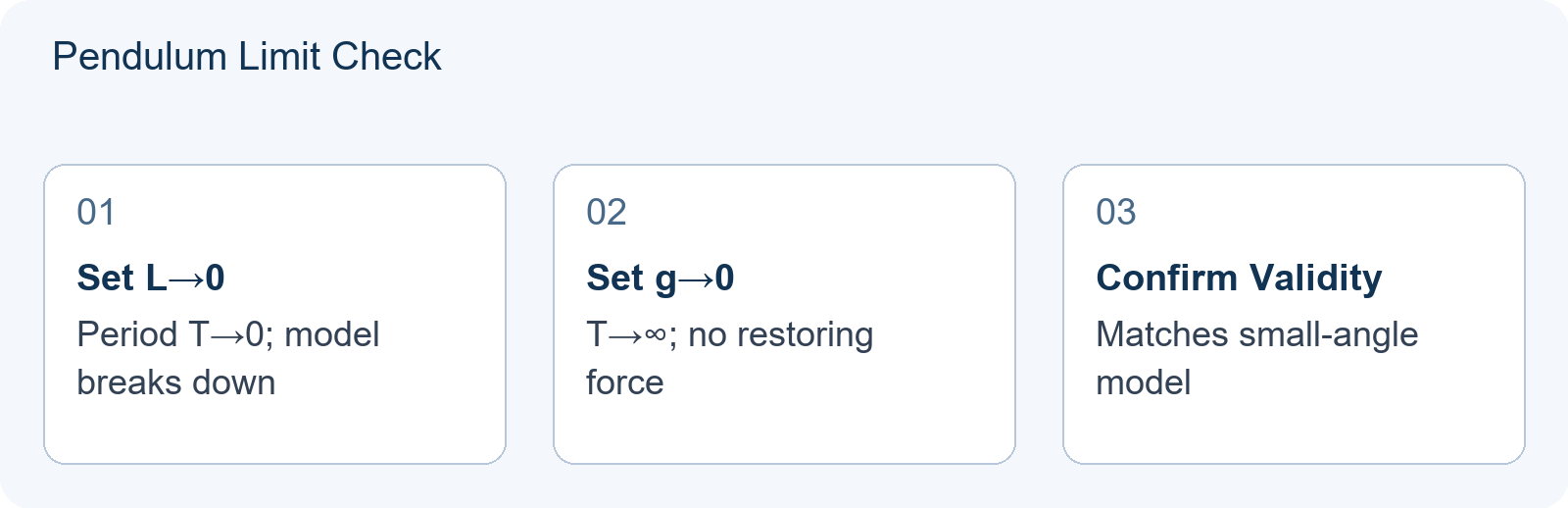
Principle: Substitute parameters with extreme values (0, ∞, 90°, etc.) to check option plausibility.

Application: Suitable for comprehensive questions involving angles, velocity, distance.

3. Strict Time Allocation + Question-Skipping Strategy

Question # Suggested Time Strategy
1–20 20 minutes Foundational questions, aim for all correct
21–30 15 minutes Medium questions, skip if stuck for over 1 minute
31–40 10 minutes Difficult questions, guess intuitively, never leave blank

Golden Rule: Select an answer for every question! The Physics Bowl has no penalty for wrong answers; guessing still gives a 25% chance.

Need More Help?

The article mentions study groups, materials, and coaching courses. If you'd like me to explore more specific Physics Bowl preparation content from this website (if other articles are available), please let me know.

推荐

What Makes the Physics Bowl Unique? A Complete Guide to the 2026 High-Frequency Topics & Strategies!

The Physics Bowl is a global high school physics competition organized by the American Association of Physics Teachers (AAPT). Known for its high volume of questions, fast pace, full English format, and broad content coverage, it has become a prestigious STEM competition with significant value for U.S. college applications. As preparation for the 2026 season enters its final sprint, this article focuses on high-frequency topics, core challenges, and key strategies to transform from "not finishing" to "securing a high score"!

推荐

Part 1: Core Features of the Physics Bowl Exam (The Three Main Challenges)

Challenge Specific Manifestation Key to Coping
Speed Limit 40 questions in 45 minutes → An average of only 67 seconds per question Timed practice + question-skipping strategy + rapid elimination
Full English Test Dense with professional terminology (e.g., torque, capacitance, diffraction) Build physics academic vocabulary + Familiarize with question phrasing habits
Broad Knowledge Range Covers all high school physics modules, even extending to astronomy, semiconductors, etc. Focus on high-frequency topics, abandon obscure/rare questions

Part 2: 2026 Physics Bowl High-Frequency Topic Predictions (Sorted by Priority)

1. Mechanics (35%–40%|Most Frequent! Must-win Territory)

Rigid Body Rotation: Moment of inertia calculation, conservation of angular momentum (e.g., skater pulling arms in)

Momentum & Energy: Elastic/inelastic collisions, conservation of mechanical energy (including springs, inclined planes)

Circular Motion: Centripetal force source analysis (rope, rod, track), critical velocity

Simple Harmonic Motion: Pendulum period formula, spring oscillator energy conversion

Fluid Mechanics: Archimedes' principle (buoyancy), "effective gravity" in accelerating reference frames

Power & Work: Instantaneous power P=Fv, average power calculation

Key Scoring Focus: Mechanics accounts for over 50% of the first 15 questions. Ensure all basic questions are correct!

2. Electromagnetism (25%–30%|Second Most Frequent, Key for Differentiation)

Circuit Analysis: RC/LC circuit charging/discharging, equivalent resistance/capacitance calculation

Electric Field & Potential: Superposition of point charge fields, relationship between potential difference and electric field strength

Gauss's Law: Electric field calculation for symmetrical distributions (sphere, cylinder, plane)

Electromagnetic Induction: Lenz's law for current direction, Faraday's law for quantitative calculation

Maxwell's Equations: Understand the physical meaning of the four equations (not derivation)

3. Thermal Physics & Optics (15%–20%|Stable Scoring Module)

Covers thermodynamics laws (Carnot cycle efficiency), ideal gas law; geometric optics (lens imaging), wave optics (interference/diffraction). Strategy: Thermal and optics questions are usually clear in concept and simple in calculation—be sure to secure these points!

4. Modern Physics (15%–20%|Increasing Proportion in Recent Years!)

Photoelectric Effect: Einstein's equation Ek=hν−W0, cutoff frequency

Relativity: Time dilation Δt=γΔt0, length contraction

Atomic Physics: Bohr model energy level transitions, hydrogen atom spectrum

Nuclear Physics: Half-life calculation, decay types (α/β/γ)

Note: Modern physics questions are mostly conceptual analysis, focusing on understanding rather than heavy calculation.

推荐

Part 3: Three Major Physics Bowl Scoring Strategies

Strategy 1: Dimensional Analysis

Principle: Units of physical quantities must be consistent.

Application: Quickly eliminate options with incorrect units.

Strategy 2: Extreme Value Substitution

Principle: Substitute extreme values (0, ∞, 90°, etc.) into parameters to check option plausibility.

Application: Suitable for comprehensive questions involving angles, velocity, distance, etc.

Strategy 3: Strict Time Allocation + Question-Skipping Strategy

Question Range Suggested Time Strategy
1–20 20 minutes Foundational questions, aim for all correct
21–30 15 minutes Intermediate questions, skip if stuck for over 1 minute
31–40 10 minutes Difficult questions, select by intuition, never leave blank

The Golden Rule: Answer Every Question! The Physics Bowl has no penalty for wrong answers. Guessing still gives a 25% chance of getting it right.

推荐