 PhysicsBowl
For students targeting top-tier engineering and physics programs, Physics Bowl 2027 registration requires early strategic planning. The most significant change for the upcoming cycle is the elimination of online testing options. According to recent updates from the American Association of Physics Teachers (AAPT), the competition will revert to strictly offline, paper-based examinations to maintain integrity and standardization.
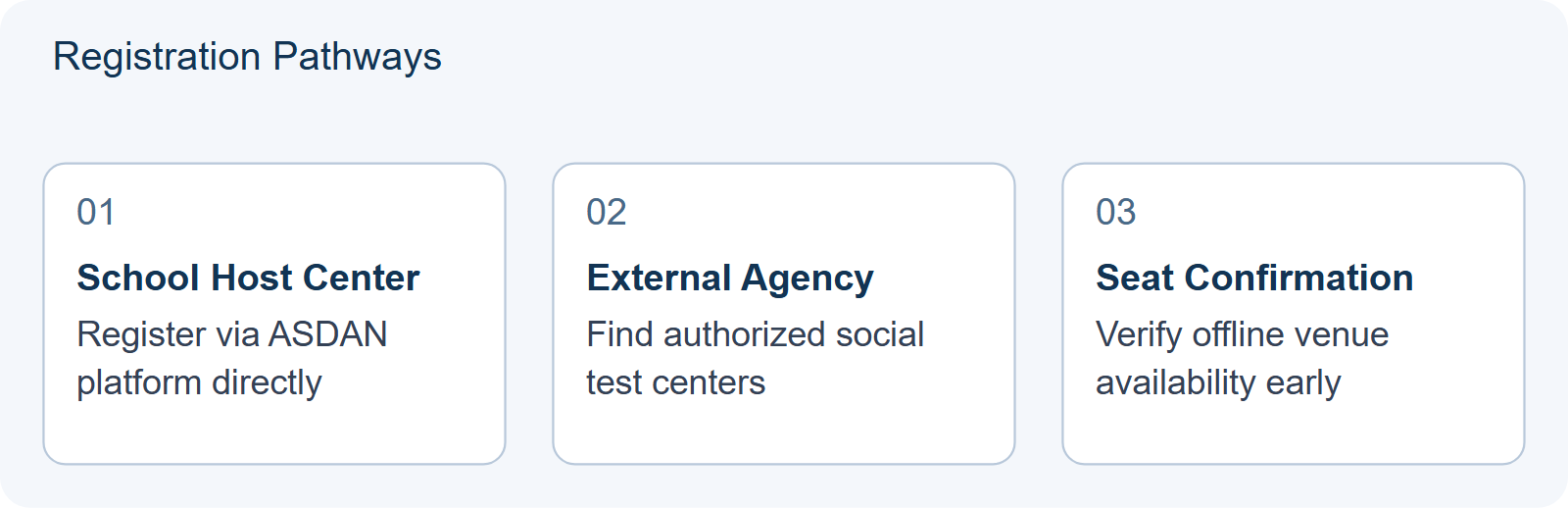
This shift impacts how you secure your spot. If your school is an official host center, registration typically flows through the ASDAN platform. However, if your institution does not offer this pathway, you must identify an authorized external test center. Seats at these social test centers are limited and fill quickly, making early action critical for successful Physics Bowl 2027 registration.
Understanding the Offline-Only Format
The move away from remote proctoring addresses concerns raised during the 2026 season, where high-score anomalies prompted officials to withhold global top-100 rankings. By returning to traditional paper-and-pencil testing under supervised conditions, AAPT aims to ensure uniform exam environments. For students, this means:
- Standardized Conditions: All candidates take the exam at the same time in controlled physical locations.
- No Device Dependencies: You do not need to configure cameras or internet connections, but you must be physically present at the assigned venue.
- Proctored Integrity: On-site invigilators oversee the process, reducing opportunities for unauthorized collaboration.
If you are unsure whether your school hosts the event, consult with your science department head immediately. For those without school access, partnering with an authorized educational agency can facilitate entry into available regional test centers.
Division Selection and Content Scope
Choosing the correct division is vital for accurate benchmarking. The competition is divided into two levels, both featuring 45-minute multiple-choice sessions with no experimental components.
| Feature | Division 1 (D1) | Division 2 (D2) |
|---|---|---|
| Target Audience | IB Year 10, A-Level G2, strong G1 | IB Years 11-12, A-Level Students |
| Question Range | Questions 1–40 | Questions 11–50 |
| Difficulty Profile | Covers core AP/IB Physics concepts | Broader scope, deeper conceptual analysis |
| Key Topics | Mechanics, E&M, Thermodynamics, Optics | All D1 topics plus advanced Modern Physics |
Note that D2 questions overlap significantly with D1 but extend into more complex applications. Students should align their choice with their current curriculum progress rather than grade level alone.
Strategic Preparation Timeline
With registration windows often opening around December and contests held in March, a structured study plan is essential. Here is a recommended roadmap for effective preparation leading up to Physics Bowl 2027 registration and the exam date.
Preparation Phase Overview
- Sept-Oct: Foundation Review
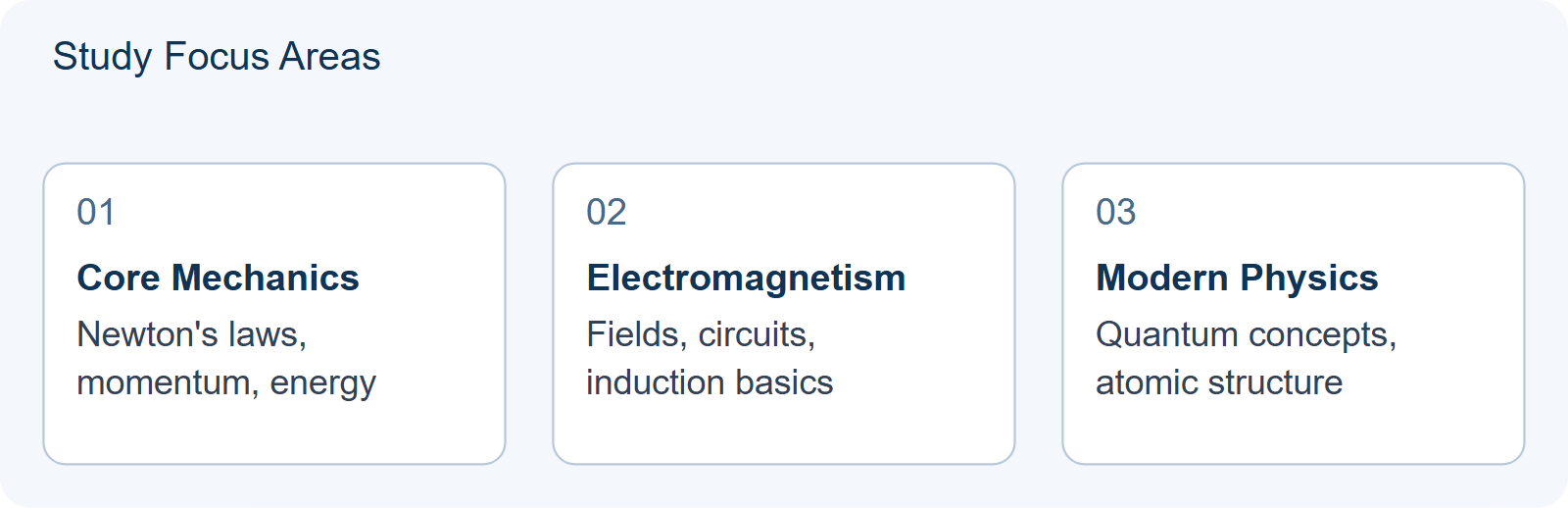
Identify gaps in Mechanics and Electromagnetism using past papers from 2020-2025. - Nov-Dec: Registration & Mock Tests
Secure your test seat via ASDAN or authorized centers. Begin timed practice sessions. - Jan-Feb: Advanced Problem Solving
Focus on D2-specific topics like Quantum Mechanics and Relativity if applicable. - March: Final Polish
Review formula sheets and conduct full-length simulations under exam conditions.
During the November-December phase, prioritize securing your slot. Since online options are gone, physical proximity to a test center becomes a logistical constraint. Early confirmation prevents last-minute travel issues.
Leveraging Resources for Success
Effective preparation relies on quality materials. While official past papers are valuable, they require contextual understanding. Many students benefit from structured coaching that breaks down the 32 key knowledge modules identified in recent analyses. These include detailed coverage of kinematics, circular motion, fluid dynamics, and wave optics.
Consider utilizing comprehensive equation sheets and concept maps to streamline revision. For instance, mastering the conventions behind vector notation and unit conversions can prevent common scoring errors. Additionally, reviewing tie-break rules helps understand why precision in later questions matters, even if earlier ones seem straightforward.
Remember, Physics Bowl results serve as corroborative evidence in university applications, particularly for STEM majors. They demonstrate academic rigor but do not replace holistic application strategies. Focus on building genuine problem-solving skills rather than just chasing scores.
Frequently Asked Questions
Is online testing still available for Physics Bowl 2027?
No. Based on recent announcements, the competition has cancelled online seats to restore exam integrity. All participants must attend an offline, proctored location.
How do I register if my school doesn’t host the exam?
You can seek assistance from authorized educational agencies that partner with regional test centers. These organizations help students find available slots when direct school registration isn’t possible.
Which division should I choose?
Select Division 1 if you are in IB Year 10 or equivalent. Choose Division 2 if you are in IB Years 11-12 or have completed advanced A-Level physics. Align your choice with your current coursework depth.
Illustrative Scenario: The Logistics of Test Center Selection
To demonstrate how the advice in this article applies to real-world planning, consider a hypothetical student named Alex. Alex is currently in IB Year 11 and has completed the core mechanics and electromagnetism modules required for Division 2. However, Alex’s school does not host the Physics Bowl as an official test center. This scenario highlights the critical decision point regarding registration pathways and preparation timelines.
Alex faces two plausible choices for securing a seat. Option A involves waiting until the general registration window opens in December to search for any remaining seats at distant regional centers. Option B involves proactively contacting authorized educational agencies immediately after the September foundation review phase to reserve a spot at a nearby partner center. The key difference lies in logistical certainty versus flexibility.
If Alex chooses Option A, there is a significant risk that all local seats fill within hours of opening. This could force Alex to travel three hours each way on exam day, adding fatigue and stress to an already high-pressure environment. Furthermore, late registration might compress the November-December mock test phase, leaving less time to adjust study habits based on practice results. Conversely, choosing Option B secures a venue within a 30-minute commute. This allows Alex to maintain the recommended timeline, using the reserved slot as a fixed deadline to drive consistent weekly practice sessions.
The decision changes based on two factors: geographic scarcity and personal schedule rigidity. If you live in a major metropolitan area with multiple authorized centers, waiting might be low-risk. However, if you reside in a rural or semi-rural area, early action via agency partnerships becomes essential. Additionally, students with heavy extracurricular commitments benefit from the certainty of Option B, as it removes the mental load of last-minute logistics during peak academic periods.
| Decision Factor | Option A: Wait for General Release | Option B: Early Agency Reservation |
|---|---|---|
| Seat Availability | High uncertainty; risk of no local seats | Guaranteed if secured early |
| Travel Burden | Potentially long-distance; unknown until late | Known short commute; planned in advance |
| Study Impact | May disrupt Nov-Dec mock test routine | Supports structured timeline adherence |
This illustrative example underscores that registration is not merely administrative but strategic. By treating seat acquisition as part of the preparation timeline, students can align their physical location with their study goals. The offline-only format demands that proximity be considered alongside curriculum readiness.
Reusable Self-Check: Before finalizing your registration strategy, ask yourself: “If I cannot secure a seat within a one-hour radius by January, do I have a backup plan?” If the answer is no, prioritize early reservation through available channels. Also, verify that your chosen division aligns with your current coursework depth rather than just your grade level, ensuring that the logistical effort matches your academic preparedness.
As you map your 2027 test route, align preparation with the official timeline. Review From September to the Contest Window: A Stage-by-Stage PhysicsBowl Plan That Survives a Real School Year for structured milestones. Ensure your study materials match current standards by checking PhysicsBowl Equation and Constants Sheets: What the 2026 Sheets Print, What the 2026 Answers Still Needed, and the Conventions Behind Every Question. Finally, understand scoring nuances via PhysicsBowl Question Numbering: Why the Booklet Has 50 Questions, You Answer 40, and One Wrong Code Can Zero a Score.
Frequently Asked Questions
Is online testing still available for Physics Bowl 2027?
No. Based on recent announcements, the competition has cancelled online seats to restore exam integrity. All participants must attend an offline, proctored location.
How do I register if my school doesn't host the exam?
You can seek assistance from authorized educational agencies that partner with regional test centers. These organizations help students find available slots when direct school registration isn't possible.
Which division should I choose?
Select Division 1 if you are in IB Year 10 or equivalent. Choose Division 2 if you are in IB Years 11-12 or have completed advanced A-Level physics. Align your choice with your current coursework depth.