 PhysicsBowl
For students preparing for the upcoming season, understanding how to effectively use Physics Bowl past papers is the most direct path to improving scores. A significant operational change confirmed in June 2026 dictates that the competition will no longer offer online seats; all examinations are now strictly offline. This shift fundamentally alters how you should approach practice. Digital timers and screen-based reading habits must be replaced by physical simulations to match the actual test-day environment.
The Shift to Offline-Only Testing
The decision to cancel online proctoring stems from integrity concerns during the 2026 season, where anomalous high scores disrupted the global ranking system. Consequently, the American Association of Physics Teachers (AAPT) has returned to the traditional format: unified time, location, and supervised paper-and-pencil testing. For prospective participants, this means your preparation strategy must prioritize tactile familiarity with the answer sheet and physical problem-solving under pressure.
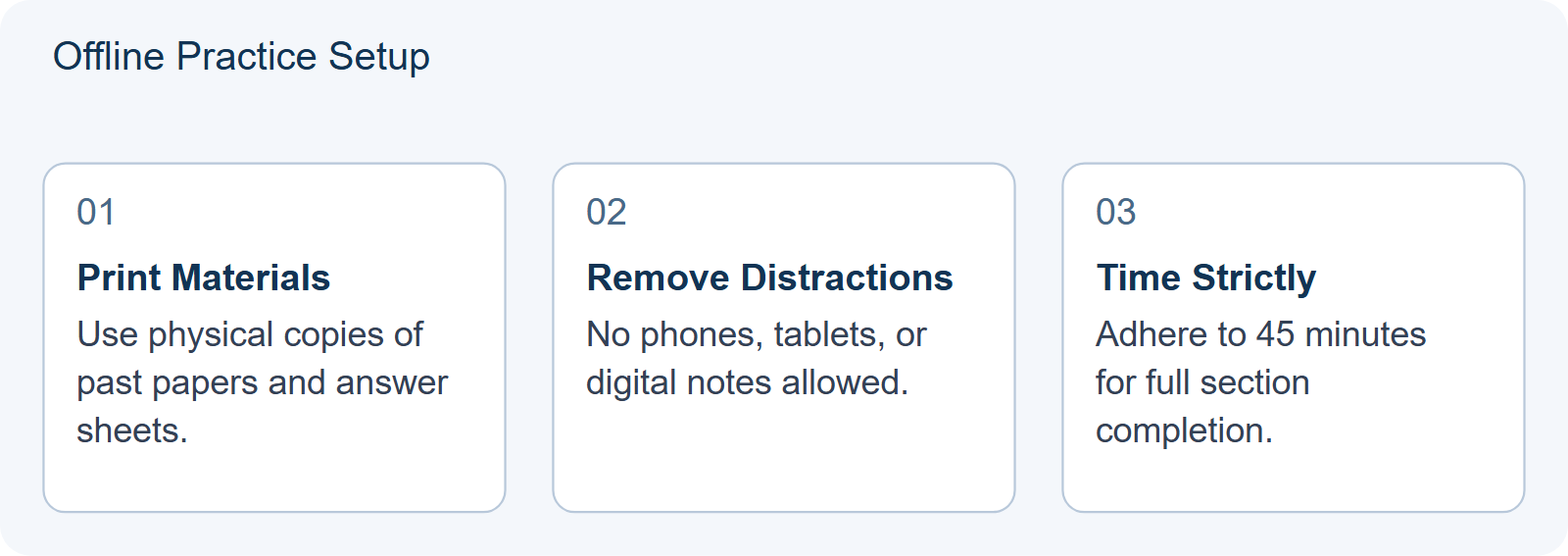
When reviewing Physics Bowl past papers, do not simply solve them on a tablet or computer. Print the questions and the answer sheet. Practice writing out derivations and marking bubbles exactly as you would in an invigilated hall. This builds the muscle memory needed to manage the 45-minute window efficiently without the friction of switching between digital tabs.
Selecting the Right Division and Paper Set
Choosing the correct practice set depends entirely on your academic standing and course history. The contest is divided into two levels, each with distinct question ranges and difficulty profiles.
| Division | Target Students | Question Range | Key Focus Areas |
|---|---|---|---|
| Division 1 | IB Year 10, A-Level G2, strong G1 | Questions 1–40 | Mechanics, Electromagnetism, Basic Optics |
| Division 2 | IB Years 11–12, Advanced A-Level | Questions 11–50 | Deeper Mechanics, Modern Physics, Complex Circuits |
Note that Division 2 does not start at question 1; it skips the initial easier questions found in Division 1. When sourcing Physics Bowl past papers, ensure you are practicing the correct subset. Solving questions 1–10 for Division 2 is inefficient, while ignoring them for Division 1 leaves gaps in foundational speed.
Verifying Answer Coverage and Explanations
Not all practice materials are created equal. Many free resources provide only the final multiple-choice letter without working solutions. For serious preparation, you need detailed explanations that show the logical derivation. Look for packs that include:
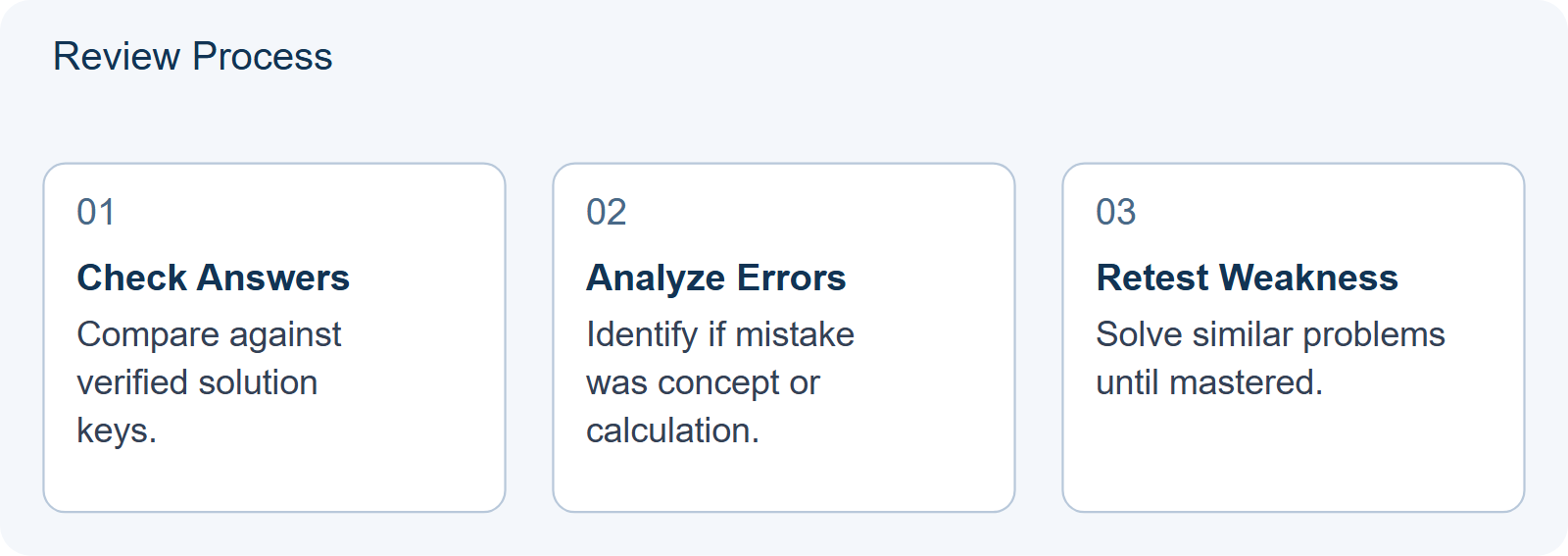
- Step-by-step solutions: Essential for understanding where you made conceptual errors versus calculation slips.
- Formula sheets: While the contest provides constants, knowing which formulas are assumed known versus provided helps in memorization strategy.
- Topic tagging: Resources that categorize questions by mechanics, thermodynamics, or electromagnetism allow for targeted weakness remediation.
If you are self-studying, verify that the answer keys correspond to the specific year’s version of the paper. Minor variations in question numbering can occur across different regional distributions or reprintings. Always cross-reference the first few questions to ensure alignment before trusting the entire key.
Simulating Exam-Day Pressure
Since the exam is now offline-only, your home study environment should mimic the silence and isolation of a test center. Turn off notifications, remove digital aids, and use a standard analog watch if permitted, or a simple timer placed away from the desk. The goal is to replicate the cognitive load of translating physics concepts into written answers without digital assistance.
Consider integrating PhysicsBowl Pacing strategies into your routine. Knowing how many seconds to allocate per question prevents getting stuck on difficult items early in the paper. Similarly, reviewing question numbering conventions ensures you don’t lose points due to administrative errors on the bubble sheet.
Finally, remember that Physics Bowl past papers are tools for diagnostic feedback, not just score prediction. Use them to identify recurring mistakes—such as unit conversion errors or misreading vector directions—and address those specific weaknesses through focused drills. With the return to strict offline supervision, thorough preparation using authentic physical materials is the best way to secure a competitive result.
HYPOTHETICAL/ILLUSTRATIVE: The “Print-and-Pace” Decision for Division 1 Mechanics
To apply the advice on selecting practice sets and verifying answer coverage, consider a hypothetical scenario involving a student named Alex. Alex is preparing for Division 1 and has downloaded two different PDF packs of past papers. Pack A contains questions 1–40 with only final letter answers. Pack B contains questions 1–40 with step-by-step derivations but is formatted for digital scrolling. Alex must decide which resource to prioritize for the next three weeks.
The core conflict here is between convenience and diagnostic depth. If Alex chooses Pack B solely for its explanations, they might fall into the trap of reading solutions passively on a screen. This violates the article’s emphasis on tactile familiarity. Conversely, if Alex chooses Pack A for its simplicity, they risk missing the conceptual errors that lead to lost points, as there are no working steps to review. The decision changes based on whether the student can enforce physical simulation while using the richer data source.
A superior approach involves modifying Pack B for offline use. Alex should print the first ten mechanics questions from Pack B, ignoring the rest for now. By limiting the scope, Alex reduces cognitive overload and focuses on the specific skill of translating written physics concepts onto a paper bubble sheet. After solving these ten questions under a strict 15-minute timer (simulating the pace), Alex then reviews the printed step-by-step solutions. This allows for immediate comparison between their handwritten derivation and the official logic, highlighting exactly where unit conversions or vector directions were mishandled.
In contrast, using Pack A would require Alex to guess at the reasoning behind wrong answers, leading to inefficient remediation. Using Pack B digitally without printing would fail to build the muscle memory required for the new offline-only format. Therefore, the choice is not just about content quality, but about how the content is physically interacted with during practice.
| Criterion | Choice A: Digital Pack B | Choice B: Printed Pack B (Selected) |
|---|---|---|
| Tactile Simulation | Low (Screen-based) | High (Paper/Pencil) |
| Diagnostic Depth | High (Has steps) | High (Has steps) |
| Error Identification | Passive Reading | Active Comparison |
| Time Management Practice | Poor (Tab switching) | Strong (Linear flow) |
This example illustrates that having detailed explanations is insufficient if the medium does not support the exam environment. The reusable self-check for any preparation choice is: “Can I physically mark my work and time myself without looking at a screen?” If the answer is no, modify the resource by printing it or restricting access to digital devices until after the timed session. Additionally, always verify that the printed questions align with the current year’s numbering scheme to ensure the answer key matches the problem set. This prevents confusion caused by minor variations in regional distributions, ensuring that every minute spent reviewing solutions is productive and accurate.
When selecting practice sets, verify that your materials align with current contest mechanics. Review the PhysicsBowl Question Numbering to understand scoring risks from coding errors. Ensure you are comfortable with the Equation and Constants Sheets, as these define what must be memorized versus referenced. Finally, check answer coverage against the Pacing Requirements to ensure your chosen set reflects realistic time constraints for forty questions.
Frequently Asked Questions
Can I still take Physics Bowl online?
No. As of the June 2026 announcement, online seats have been cancelled. All exams are conducted offline under supervision.
Which past papers should I buy?
Select papers matching your division (D1 or D2). Ensure they come with detailed worked solutions, not just answer letters.
Do I need to memorize all formulas?
The contest provides some constants, but core kinematic and dynamic relations should be automatic to save time during the 45-minute limit.