 PhysicsBowl
When most students think of physics, they picture blocks on inclined planes, circuits on breadboards, or planets orbiting stars. Yet some of the most elegant and consequential applications of physical law occur within living organisms. The human body is a laboratory of fluid dynamics, thermodynamics, electromagnetism, and mechanics operating simultaneously. Biophysics, the discipline that applies the principles and methods of physics to understand biological systems, reveals that life itself is a spectacular demonstration of physical law in action. While Physics Bowl does not dedicate a large section to biophysics explicitly, the principles underlying biological systems appear throughout the competition in questions about fluids, waves, energy transfer, and forces. Understanding these connections enriches your preparation and deepens your appreciation for the universality of physics.
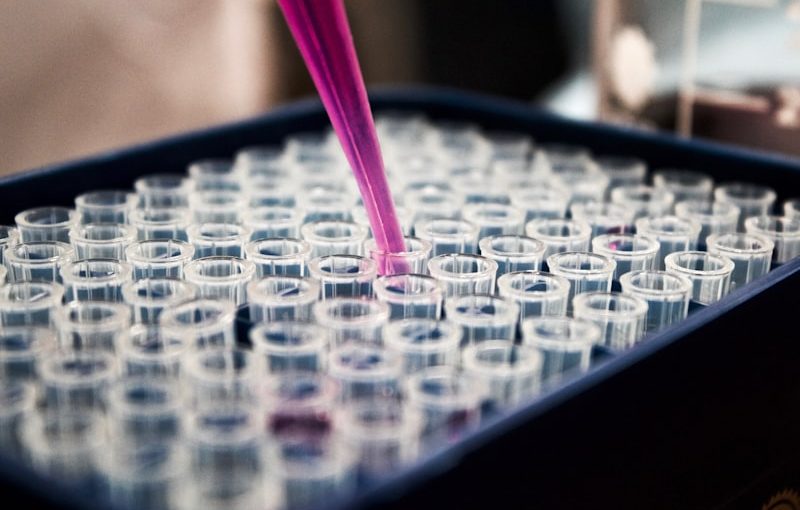
The DNA double helix, a molecular structure governed by the same electromagnetic and thermodynamic forces that physics describes at every scale
The Physics Hidden in Living Systems
Consider the human circulatory system. Blood flows through arteries and veins according to the same principles of fluid mechanics that govern water through pipes. Poiseuille’s law, which relates flow rate to pressure difference, vessel radius, fluid viscosity, and vessel length, applies equally to an industrial pipeline and to the aorta. The remarkable fourth-power dependence on radius means that a small change in vessel diameter produces an enormous change in flow resistance. This is why vasoconstriction and vasodilation are such powerful mechanisms for regulating blood pressure, and why questions about fluid flow in Physics Bowl often have biological analogies that help students build intuition.
The respiratory system offers another rich example. Gas exchange in the lungs is governed by Fick’s law of diffusion, which states that the rate of diffusion is proportional to the surface area and the concentration gradient, and inversely proportional to the membrane thickness. The lungs achieve extraordinary efficiency by maximizing surface area through millions of tiny alveoli while minimizing diffusion distance to less than a micrometer. When Physics Bowl asks about diffusion rates or concentration gradients, the underlying mathematics is identical whether the context is a chemical reaction vessel or a living lung. Recognizing these parallels allows you to transfer understanding across domains effortlessly.
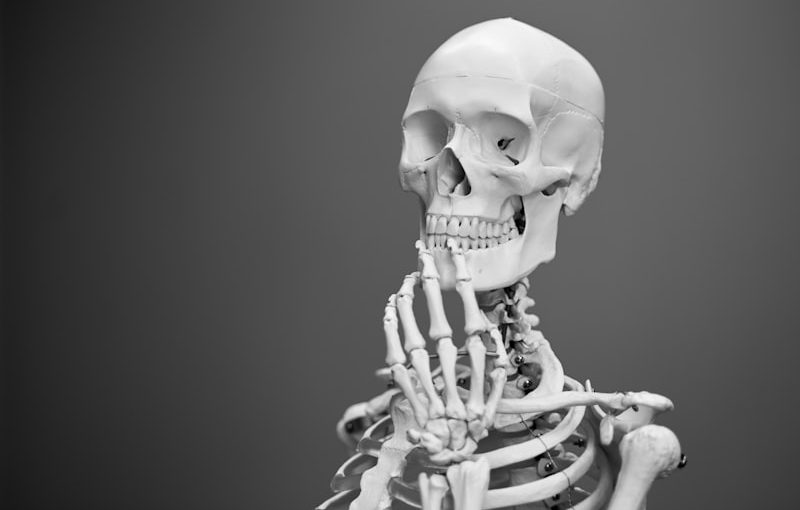
Natural ecosystems operate through physical principles, from energy flow to mechanical forces, that physics describes with precision
Mechanics of the Living Body
The skeletal and muscular systems are essentially an arrangement of levers, pulleys, and springs. Every joint in the human body functions as a fulcrum, with muscles providing effort forces and external loads providing resistance. The mechanical advantage of these biological levers explains why the biceps must exert a force many times greater than the weight held in the hand, and why the Achilles tendon experiences forces several times body weight during running. Torque, equilibrium, and center of mass calculations that appear in Physics Bowl mechanics sections apply directly to understanding how organisms move, balance, and support themselves against gravity.
Flight and swimming in the animal kingdom provide vivid illustrations of aerodynamics and hydrodynamics. A bird’s wing generates lift through the same pressure differential described by Bernoulli’s principle and Newton’s third law that keeps an aircraft aloft. The Reynolds number, which characterizes whether flow is laminar or turbulent, determines whether a swimming bacterium experiences water as a thick, viscous medium or whether a dolphin cuts through it with relative ease. These dimensionless numbers and scaling relationships are exactly the kind of conceptual tools that Physics Bowl rewards, and seeing them manifested in nature makes them far more memorable than any textbook derivation alone.
Electricity, Magnetism, and the Nervous System
The human nervous system is an electrical network of extraordinary sophistication. Neurons transmit signals through changes in membrane potential, driven by the flow of sodium and potassium ions across cell membranes. The Nernst equation, which relates ion concentration gradients to electrical potential, is fundamentally an application of electrostatics and thermodynamics. Action potentials propagate along axons in a manner analogous to signal transmission along an electrical cable, with membrane capacitance and axial resistance determining conduction velocity. The myelin sheath acts as an insulator, enabling saltatory conduction that dramatically increases signal speed, a biological solution to the same engineering challenge that coaxial cables address in telecommunications.
Medical imaging technologies provide further connections between physics and biology that occasionally surface in competition contexts. Magnetic resonance imaging relies on nuclear magnetic resonance, the interaction between atomic nuclei and external magnetic fields. X-ray imaging depends on the differential absorption of electromagnetic radiation by tissues of different density. Ultrasound imaging uses the reflection and refraction of sound waves at tissue boundaries. Each of these technologies is a direct application of physics principles, and understanding the underlying physical mechanisms gives students a richer framework than memorization alone could provide.
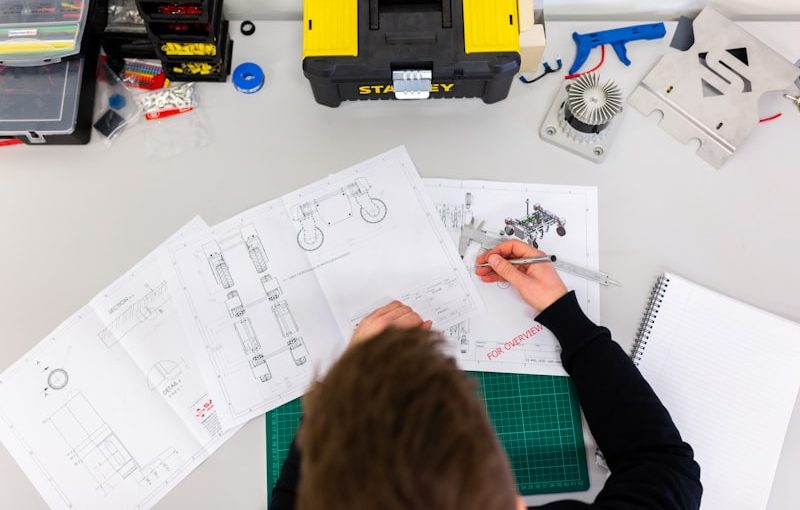
Modern research laboratories bring together physics and biology, using precise instruments to probe the physical basis of life
Thermodynamics and the Living Organism
Living organisms are open thermodynamic systems that maintain internal order by exporting entropy to their surroundings. The second law of thermodynamics is not violated by life; rather, life exemplifies how local decreases in entropy are always accompanied by greater increases in entropy elsewhere. Metabolic processes convert chemical energy from food into useful work, heat, and the maintenance of complex molecular structures. The efficiency of these conversions, typically around twenty to twenty-five percent for human muscle, connects directly to the Carnot efficiency limits and the concept of irreversibility that Physics Bowl tests in its thermodynamics sections.
Energy transfer in biological systems also illustrates the first law of thermodynamics with remarkable clarity. The energy content of food, measured in calories, is converted into kinetic energy of movement, potential energy of lifted objects, thermal energy released as body heat, and chemical energy stored in newly synthesized molecules. No energy is created or destroyed; it merely changes form. This bookkeeping of energy, tracking inputs, outputs, storage, and dissipation, is precisely the skill that Physics Bowl thermodynamics questions demand. Seeing it play out in the context of your own body, every meal and every exercise session, makes the abstract law concretely real.
The Value of Interdisciplinary Thinking
Studying biophysics alongside your Physics Bowl preparation cultivates a habit of mind that extends far beyond any single competition. It trains you to see physical principles operating in unfamiliar contexts, to recognize that the same equation can describe a river and a bloodstream, a power line and a neuron, a heat engine and a cell. This transfer of understanding is the hallmark of deep learning. Students who practice applying physics to biological systems develop a flexibility of thought that serves them well when competition questions present standard principles in unexpected guises.
Moreover, biophysics reminds us why physics matters beyond the examination hall. The principles you study for Physics Bowl are not arbitrary academic exercises; they are the operating instructions of the natural world, including the world within your own body. Every heartbeat, every thought, every breath is physics in action. Carrying this awareness into your competition preparation transforms study from a chore into a conversation with nature, and that transformation, more than any specific formula or technique, is what separates adequate performance from genuine mastery. Approach your next study session with the question, where does this principle appear in living systems, and watch your understanding deepen in ways that no amount of rote practice could achieve.