 PhysicsBowl
Few branches of physics capture the imagination quite like astrophysics. The sheer scale of the universe, from the nearest star to the most distant galaxy, transforms abstract equations into windows on cosmic reality. In the Physics Bowl competition, astrophysics questions appear regularly, testing students on orbital mechanics, stellar properties, cosmological concepts, and the fundamental forces that govern celestial bodies. Yet astrophysics in Physics Bowl is not merely a collection of formulas to memorize. It is an invitation to think at scales that challenge human intuition, to reason from first principles about objects we can never touch, and to appreciate how the same laws that govern a falling apple also govern the motion of planets billions of kilometers away.
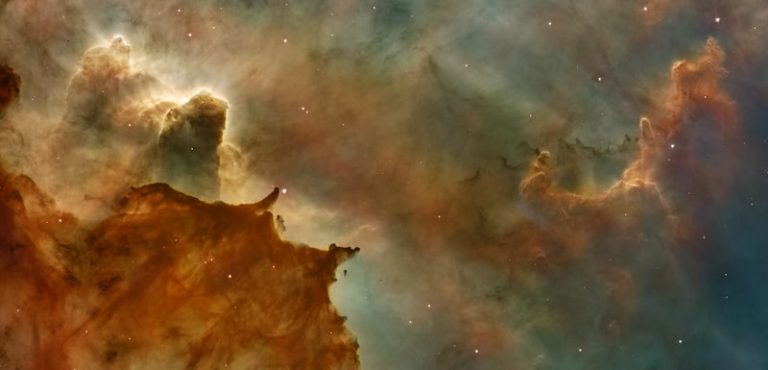
The Milky Way stretches across the night sky, a reminder that every point of light obeys the same physical laws we study on Earth
Why Astrophysics Matters in Competition
Astrophysics occupies a unique position in Physics Bowl because it integrates nearly every other topic in the syllabus. A single question about a binary star system might require knowledge of Newtonian gravity, circular motion, conservation of energy, and even thermodynamics. Questions about stellar spectra draw on wave optics, quantum mechanics, and the Doppler effect. Cosmological questions touch on relativity, redshift, and the expansion of space itself. This integrative nature means that strong performance on astrophysics questions signals deep, connected understanding rather than isolated topic mastery. Students who approach astrophysics as a synthesis of everything they have learned, rather than as a separate chapter to cram, tend to perform significantly better on these problems.
Moreover, astrophysics questions in Physics Bowl often reward physical intuition over brute calculation. The numbers involved are enormous, the distances almost incomprehensible, and the time scales vast. Success comes from developing a feel for orders of magnitude, from recognizing which effects dominate and which can be neglected, and from building mental models that connect observable phenomena to underlying principles. A student who understands why a star’s color reveals its temperature, or why orbital velocity decreases with distance from the center of a galaxy, can often eliminate wrong answers before performing any calculation at all.
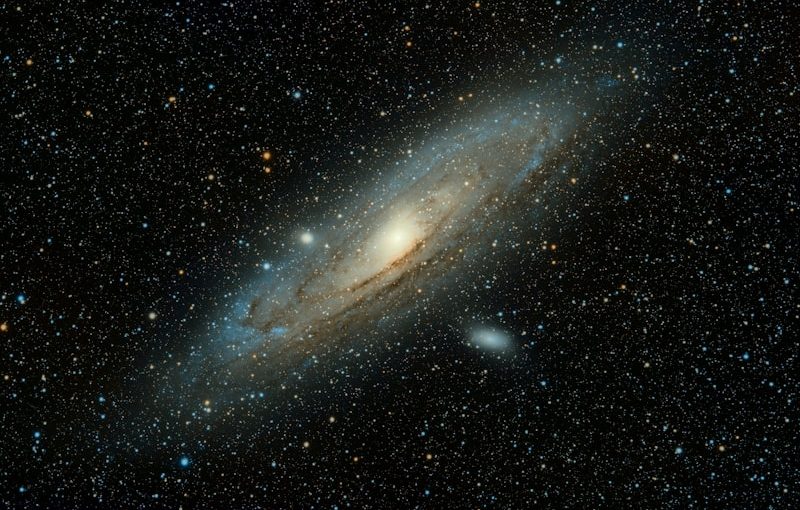
Observational astronomy connects classroom physics to the real universe through telescopes that collect light from distant objects
Core Concepts That Appear Again and Again
Several astrophysics topics recur throughout Physics Bowl exams year after year. Kepler’s three laws of planetary motion form the backbone of orbital mechanics questions. The first law establishes that orbits are ellipses with the central body at one focus. The second law, the equal areas law, is a direct consequence of angular momentum conservation. The third law connects orbital period to orbital radius and provides one of the most frequently tested relationships in competition physics. Students who can derive Kepler’s third law from Newton’s law of gravitation, rather than simply memorizing it, gain a flexible tool that extends to binary stars, exoplanets, and even galaxies.
Stellar properties represent another rich area. The Hertzsprung-Russell diagram, which plots stellar luminosity against temperature, encodes enormous information about stellar evolution. Understanding why main sequence stars follow a particular band, why giants and supergiants occupy the upper right, and why white dwarfs cluster in the lower left requires connecting nuclear fusion, blackbody radiation, and gravitational equilibrium into a coherent picture. The Stefan-Boltzmann law and Wien’s displacement law provide the quantitative bridges between a star’s observed color, its surface temperature, and its total energy output. These relationships appear in various guises throughout Physics Bowl, sometimes as straightforward applications and sometimes embedded in multi-step reasoning chains.
Gravitational physics extends beyond simple orbits. Escape velocity, gravitational potential energy, and the concept of binding energy appear frequently. Questions about black holes test understanding of the Schwarzschild radius and the relationship between mass and the event horizon. Tidal forces, which arise from the gradient of a gravitational field rather than its absolute strength, connect to topics ranging from ocean tides on Earth to the disruption of stars that pass too close to supermassive black holes. Each of these concepts builds on Newtonian gravity while pushing students to think about extreme conditions far removed from everyday experience.
From Textbook to Telescope: Bridging Theory and Observation
One of the most rewarding aspects of astrophysics is that the theory you study in textbooks connects directly to what astronomers observe through telescopes. When you learn about the Doppler effect in waves, you are learning the same principle that allows astronomers to measure the radial velocity of stars and to discover the expansion of the universe through cosmological redshift. When you study blackbody radiation and Planck’s law, you are studying the physics that determines why Betelgeuse appears red while Rigel appears blue. When you work through the equations of nuclear fusion, you are understanding the engine that powers every star in the sky.
This connection between theory and observation gives astrophysics questions a distinctive character in Physics Bowl. They often begin with an observational fact, a star’s spectrum shows certain absorption lines, a planet’s orbital period is measured at a particular value, a galaxy’s light is redshifted by a specific factor, and ask you to reason backward to physical conclusions. Training yourself to move fluently between observation and explanation, between what we see and what it means, is one of the most valuable skills you can develop for competition success. Practice taking a real astronomical measurement and asking what physical properties it constrains. This habit transforms abstract formulas into tools for understanding the actual universe.

Our home planet seen from orbit, a perspective that transforms how we understand our place in the vast cosmos
The Power of Scaling and Order-of-Magnitude Reasoning
Astrophysics demands comfort with numbers that dwarf everyday experience. The Sun contains roughly two times ten to the thirtieth kilograms of matter. The nearest star system, Alpha Centauri, lies about four times ten to the thirteenth kilometers away. The observable universe spans roughly ten to the twenty-three kilometers. Developing fluency with these scales, and more importantly with the ratios between them, is essential for Physics Bowl success. Many astrophysics questions can be approached through dimensional analysis and scaling arguments before any detailed calculation begins.
Consider how scaling works in practice. If you know the Sun’s luminosity and the Earth’s orbital radius, you can estimate the solar flux at any planet’s distance by recognizing that flux falls off as the inverse square of distance. If you double the distance, the flux drops by a factor of four. If you know how the orbital period of a planet depends on its distance from the Sun through Kepler’s third law, you can estimate the period of any object in the solar system without solving differential equations. This scaling mindset, recognizing proportionalities and applying them to new situations, is arguably the single most transferable skill that astrophysics study provides. It serves students not only in competition but throughout any scientific career.
Beyond the Competition: A Changed Perspective
Perhaps the most profound gift of studying astrophysics is the shift in perspective it produces. When you understand that the light from the Andromeda galaxy has traveled for two and a half million years to reach your eyes, that the iron in your blood was forged in the cores of ancient stars, that the expansion of the universe is not an explosion into space but an expansion of space itself, your relationship to the physical world changes permanently. Physics ceases to be a collection of exam topics and becomes a language for reading the story of the cosmos.
For Physics Bowl competitors, this deeper engagement translates directly into better performance. Students who are genuinely curious about why stars shine, how galaxies form, and what the cosmic microwave background tells us about the early universe bring an energy and persistence to problem solving that rote memorization cannot match. The competition becomes not just a test to pass but a celebration of understanding, a chance to demonstrate that you can think clearly about the largest and most ancient objects in existence. Approach your astrophysics preparation with wonder alongside rigor, and you will find that the equations come alive in ways that make both the competition and the subject itself infinitely more rewarding.