 PhysicsBowl
The 2026 Physics Bowl exam has concluded, and for many students and parents, the most pressing concern is how to check their scores. Meanwhile, based on the latest 2026 exam situation, the question trends for the Physics Bowl have also undergone significant changes. This article will provide you with a detailed guide on checking your scores and offer an in-depth analysis of future preparation directions.
I. Complete Guide to Physics Bowl Score Inquiries: Two Channels for Quick Access
How you check your Physics Bowl results mainly depends on your registration channel. Please choose the corresponding inquiry path based on your actual situation.
1. Registration through School or Institution (Mainstream Method in China)
This is the most common way to check results. If you registered through your international school or an institution like ASDAN, your scores are usually not sent directly to your personal email.
School Notification: Scores are first sent to the teacher in charge at your school. You need to directly contact your physics teacher or the competition coordinator to obtain your score report. Some schools may provide an internal online inquiry link.
ASDAN Platform Inquiry: If you registered through ASDAN, you can log in to the “ASDAN International Science Assessment” official website or its WeChat mini-program. After entering your personal account, find the 2026 Physics Bowl project under “My Registrations” or a similar section, where you can download the electronic version of your score report.
2. Individual Registration (International Students)
For overseas students or those who registered individually, you can check your results through the official website of the American Association of Physics Teachers (AAPT).
AAPT Official Website Inquiry: Log in to the AAPT official website using the email address and password you used during registration. In the “Physics Bowl Results” section, you can find and download your PDF score report.
3. Information Required for Score Inquiry
Regardless of the method, please be sure to have the following information ready in advance to quickly complete identity verification:
Personal Information: Full name, admission ticket number, or registered email address.
Team Information: If you need to check team awards, you may also need to provide the school name or team code. This information can be obtained from your supervising teacher.
II. Analysis of Physics Bowl Question Trends: Return to Fundamentals, Understanding is Paramount
Based on the 2026 exam situation, the question design style of the Physics Bowl is undergoing a significant shift, exhibiting three major characteristics: “lowered difficulty, return to fundamentals, and emphasis on understanding.”
1. Overall Difficulty: Annual Fluctuations, Significant Decrease in 2026
The difficulty of the Physics Bowl fluctuates from year to year. Compared to 2025 and some previous years, the difficulty of the 2026 exam was notably lowered. Over 85% of the questions on the entire paper were basic to intermediate level. Complex physical derivations, out-of-syllabus models, and deliberately set calculation traps were significantly reduced, with a greater focus on the flexible application of core knowledge learned in class.
2. Topic Distribution: Mechanics Dominates, Thermodynamics Gains Importance
Mechanics Continues to Dominate: The mechanics section remains the absolute core, accounting for 60%-70% of the paper. Kinematics, Newton’s laws, momentum and energy conservation, circular motion, rigid body rotation, etc., are mandatory topics, with classic models such as pendulums, springs, and connected bodies appearing frequently.
Increased Weight of Thermodynamics: The proportion of thermodynamics-related questions has increased. Topics such as the ideal gas law, the first law of thermodynamics, and thermal radiation have shifted from “marginal topics” to modules requiring focused attention.
Electromagnetism/Optics Fundamentals: Questions on electromagnetism and optics primarily focus on basic concepts and simple calculations, with fewer complex circuit analysis and electromagnetic induction comprehensive problems.
Weakening of Modern Physics: The proportion of modern physics content, such as quantum physics and relativity, has decreased, with questions becoming closer to everyday popular science knowledge.
3. Question Style: Concepts Reign Supreme, Calculations Simplified
Increased Conceptual Analysis: Questions place greater emphasis on a deep understanding of physical principles rather than the mechanical application of formulas. For example, there is an increase in qualitative concept questions testing the slope of v-t graphs, the area under F-x graphs, the relationship between impulse and momentum, etc.
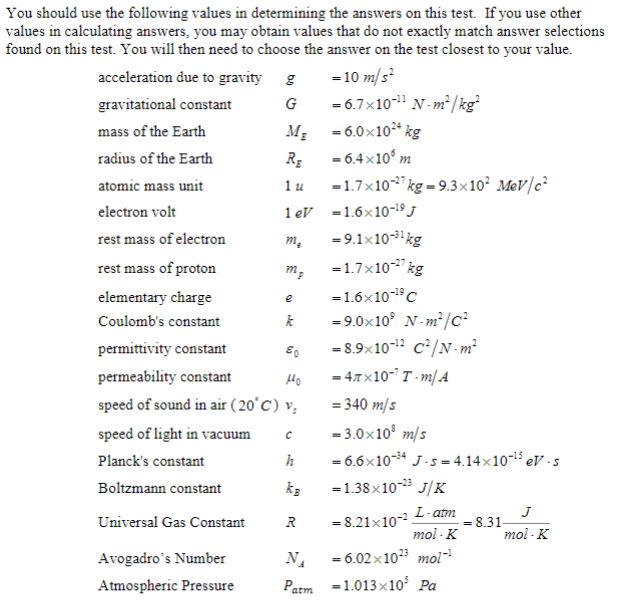
Overall Calculation Simplification: The exam uniformly uses g = 10.0 m/s², with neat numerical designs. Complex trigonometric and exponential calculations have almost disappeared, and most questions can be completed through mental math or simple written calculations.
Contextualization and Integration: More questions are set in real-world contexts (e.g., satellite orbits, simplified MRI principles), and there is an increased integration of knowledge across chapters, such as combining mechanics and electromagnetism, or integrating graphs with concepts, testing students’ comprehensive analytical abilities.
This series of changes indicates that the Physics Bowl is shifting from a “difficult problem competition” back to a “competency assessment,” providing greater opportunities for awards to students who genuinely understand physical principles and have a solid foundation.
〖Scan to Get for Free〗 Physics Bowl Past Papers + Physics Bowl High-Frequency Formulas + Categorized Question Banks + Mock Assessments!
Competition Past Papers | Common Formula Sheets | Physics Bowl Prep Books | Key Concept Notes + Categorized Bank | Online Customer Service | WeChat Inquiries