 PhysicsBowl
On the stage of international physics competitions, the Physics Bowl has become a “must-take” course for prospective science and engineering students due to its extremely fast answering pace and broad knowledge coverage. However, faced with the two tracks, Division 1 (D1) and Division 2 (D2), many students fall into confusion from the very start: Where exactly does the difference in difficulty lie? What obstacles must one overcome to grow from a physics “novice” to a high-scoring global competitor? This article will unveil the mysteries of D1 and D2 and lay out a practical guide for sprinting to the top.
I. Deep Dive: The Difficulty Divide Between D1 and D2
The format of the Physics Bowl exam is quite unique: there are 50 questions in total. D1 students answer questions 1-40, while D2 students answer questions 11-50[reference:0]. This means questions 11-40 are shared by both divisions, and the true differentiated competition lies at the beginning and the end.
1. Target Candidates
Division 1 (D1): Primarily for Grade 10 and 11 students (10th and 11th grade), especially those just beginning to explore physics competitions or currently studying foundational physics courses[reference:1].
Division 2 (D2): Designed for senior students in Grade 12 and above who have a solid and robust foundation in physics[reference:2].
2. Depth and Breadth of Knowledge
Core of D1: Focuses on mechanics, electromagnetism, optics, and basic thermodynamics. Although the questions have flexible contexts, most stay within the core syllabus of A-Level/IB/AP physics[reference:3].
Additions in D2: Questions 41-50, which D2 students must answer, are the “deep end” of the exam[reference:4]. This section introduces a significant amount of modern physics (e.g., Bohr model, wave-particle duality), special relativity, astrophysics, and more complex fluid mechanics[reference:5]. Compared to D1, D2 requires students to have a stronger grasp of calculus fundamentals (though the exam doesn’t directly test calculations, understanding derivations requires calculus thinking) and a broader vision of physics[reference:6].
3. Tolerance for Errors and Competitive Pressure
Since D2 students typically undergo more systematic and longer training, competition in the high-score range is much more intense than in D1. In the D2 track, achieving a global top 100 ranking often requires facing more stringent cut-off scores[reference:7].
II. From Beginner to Gold Medal: The Three Things You Need to Get Right
Regardless of which track you choose, to complete 40 questions in 45 minutes and achieve a gold medal, you must reach your peak in these three dimensions[reference:8].
1. Develop “Muscle Memory” for Formula Retrieval
The average time to answer a Physics Bowl question is only 67.5 seconds[reference:9]. If you’re still deriving formulas on the spot (like the centripetal force formula, or motional EMF in electromagnetic induction), you’re losing ground at the starting line.
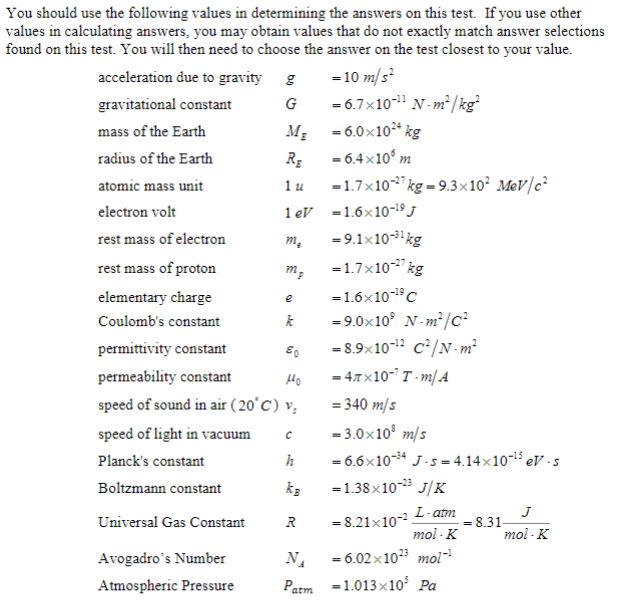
Action Steps: Compile your own “Physics Bowl Formula Collection,” covering everything from constants to niche theorems[reference:10]. Through repeated timed module drills, internalize formulas into intuition—so that when you see a problem description, your brain automatically matches it with the corresponding physical model and formula[reference:11].
2. Conquer “History of Physics” and “Common Sense Traps”
Each year, the Physics Bowl includes 2-5 questions that are “out of the ordinary,” asking who discovered the neutron, the significance of Hubble’s Law, or the order of magnitude of a certain physical constant[reference:12].
Action Steps: Set aside 3-5 days to read through the history of physics and compile a list of famous physicists and their major contributions[reference:13]. Also, develop a strong intuitive sense of physical quantities (e.g., the mass of a ping-pong ball, the order of magnitude of the distance from the Earth to the Moon). These bits of common sense can often help you quickly answer a question through elimination[reference:14].
3. Master Answering Strategies Under “Non-Equilibrium” Conditions
In this 45-minute high-speed game, mental collapse is a common ailment among many competitors.
Action Steps: Adopt a “slow then fast” strategy[reference:15]. The first 15 questions should be answered “steadily”—these questions form the foundation for winning an award, and you cannot afford to lose points due to carelessness[reference:16]. The next 15 questions require “accuracy”—use techniques like dimensional analysis and plugging in extreme cases to quickly lock in the answer. For the last 10 questions, be “flexible”—if you can’t formulate a model within 30 seconds, decisively mark it and skip it, ensuring you spend your limited time on points you can actually secure[reference:17].
III. Stage-Specific Recommendations for 2026 Season Candidates
Grade 10 and below (Novice/First Exploration): It is recommended to target D1, prioritizing the solidification of the mechanics module and participating in problem-solving training at a moderate pace[reference:18].