 PhysicsBowl
For students aiming to apply for the world’s top science and engineering programs, the Physics Bowl is undoubtedly one of the most valuable international physics competitions at the high school level. Sponsored by the American Association of Physics Teachers (AAPT) and with a history of over 30 years, this competition is not only an important benchmark for top North American universities to assess students’ physics abilities but also an excellent stage for STEM applicants worldwide to demonstrate their academic potential.
I. Why is the Physics Bowl Highly Valued by Prestigious Universities?
The value of the Physics Bowl goes far beyond just an award certificate. In today’s era of increasing homogenization in standardized test scores, it can provide the strongest academic evidence for your application essays.
An “Invisible Threshold” for Top Universities: Among MIT’s early action admittees, more than 30% have achieved a Global Top 100 ranking in the Physics Bowl. Engineering and physics programs at UK G5 universities widely regard it as an important academic supplement beyond AP, IB, and other curricula.
An Intuitive Demonstration of Academic Potential: The exam content of the Physics Bowl highly overlaps with school curricula (AP, IB, A-Level). The preparation process itself is a deep consolidation and ability enhancement of your physics knowledge system. Its awards intuitively demonstrate your physics thinking, problem-solving speed, and academic enthusiasm, becoming a highly persuasive “plus” in the eyes of admissions officers.
II. Which Division is Right for Your Grade Level?
The Physics Bowl is divided into Division 1 (D1) and Division 2 (D2) based on difficulty. Students in different grades should choose the track that best suits them.
| Grade Level | Recommended Division | Description |
|---|---|---|
| G7-G9 | Foundational Introduction | It is recommended not to rush into the competition. Cultivate interest through basic physics courses, laying a solid foundation for subsequent systematic preparation. |
| G10 | Division 1 | At this point, students have mastered foundational physics knowledge such as IGCSE and introductory AP, enabling them to tackle basic question types in D1 like kinematics, Newton’s laws, and circuits. It’s a golden starting point for accumulating competition experience. |
| G11-G12 | Division 2 | Students have typically completed AP Physics 1/2 or IB Physics SL, equipping them to handle more complex question types in electromagnetism and thermodynamics in D2. This is a critical period for enhancing your application background. |
In simple terms, grades 10-11 are the golden period for participating in the Physics Bowl.
III. Analysis of the 2026 Physics Bowl Exam Situation
Based on the latest exam analysis, the question design of the Physics Bowl is undergoing a positive transformation, becoming more friendly to students who genuinely understand physical principles.
1. Overall Difficulty Significantly Decreased
In recent years, the overall difficulty of the Physics Bowl has significantly decreased compared to previous years, making this the easiest edition in the past three years. Over 85% of the questions on the entire paper are basic to intermediate types. Even the high-difficulty questions in the later part (questions 41-50) of Division 2 primarily use conventional physics models, with no deliberately obscure cross-module comprehensive problems.
2. Three New Characteristics in Question Design
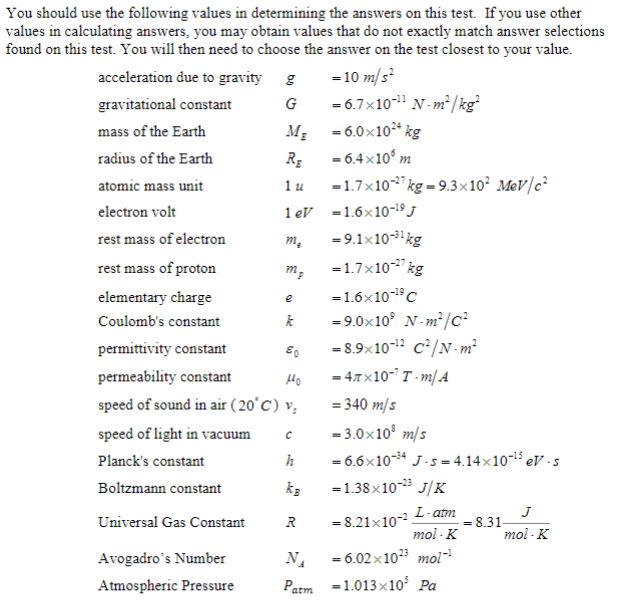
Complete Simplification of Calculations: Numerical values are designed neatly, and calculations even directly use g=10, significantly reducing complex trigonometric and exponential operations. Many questions can be solved through mental arithmetic or simple calculations.
High Frequency of Classic Models: Mandatory models such as simple pendulums, springs, and conservation of momentum appear frequently. The reuse rate of classic content like lens imaging is extremely high. This means practicing past papers is highly cost-effective, with the recurrence rate of similar questions exceeding 30%.
Increase in Conceptual Analysis Questions: Questions focus more on testing genuine understanding of physical definitions, such as the physical meaning of the slope of a v-t graph and qualitative analysis of the water freezing process, preventing students from mechanically applying formulas. Questions on astronomical and physics history trivia have also become milder, mostly testing well-known popular science topics like the discovery of pulsars, which can be handled with daily accumulation.
This trend indicates that the Physics Bowl is shifting from a “difficult problem competition” back to a “capability assessment,” providing greater opportunities for awards to students who have a solid grasp of foundational knowledge and good physics intuition.
IV. 2026 Physics Bowl Award Cutoff Scores (Official)
Based on official announcements from ASDAN China for the 2026 Physics Bowl, the national award cutoff scores are as follows:
Division 1 (D1):
– Top Gold (Super Gold): 34 points
– Gold: 30 points
– Silver: 26 points
– Bronze: 23 points
Division 2 (D2):
– Top Gold (Super Gold): 39 points
– Gold: 36 points
– Silver: 31 points
– Bronze: 27 points
Looking back at last year, 28 or 29 points in Division 2 would almost guarantee a Gold, and 31 points was close to Top Gold. However, this year, 28 points only earns a Bronze, and 31 points only reaches Silver. This change in cutoffs indicates that the number of high-scoring students has significantly increased, leading to unprecedented competition at the top level.
V. 2026 Physics Bowl Global Participation Data
The 2026 Physics Bowl saw a total of 11,600 students from 572 overseas schools and 791 schools in Mainland China participate, covering more than 30 countries and regions.
Division 1 (D1) Data: Average score 21.6 points, standard deviation 7.1. Valid papers graded: 7,101. Number of teams: 1,007. The easiest question was Question 9 (88.6% correct), and the most difficult was Question 40 (21.3% correct).
Division 2 (D2) Data: Average score 25.5 points, standard deviation 7.9. Valid papers graded: 4,496. Number of teams: 868. The easiest question was Question 49 (94.26% correct), and the most difficult was Question 47 (31.0% correct).
Due to the larger number of high-scoring students this year, the AAPT has canceled the traditional “Global Top 100” ranking and now recognizes all students who scored 38, 39, or 40 out of 40 on a single “Global High Score List.”
〖Scan to Get for Free〗 Physics Bowl Past Papers + High-Frequency Formulas + Categorized Question Banks + Mock Assessments!
Competition Past Papers | Common Formula Sheets | Physics Bowl Prep Books | Key Concept Notes + Categorized Bank | Online Customer Service | WeChat Inquiries