 PhysicsBowl
Written during the 2026 cycle
That cycle has closed. The 2026 exam ran between 18 March and 3 April 2026, and registration closed on 23 February 2026 (extended to 25 February). As of 25 August 2026 AAPT had not announced the 2027 dates. For what is current, see registration and the competition rules.
In the landscape of international physics competitions, the Physics Bowl, organized by the American Association of Physics Teachers (AAPT), is undeniably highly influential. Each year students compete across twenty-two contest regions, seven of which AAPT established for Asia and the Middle East. AAPT does not publish annual participation figures. With the conclusion of the 2026 season, many students and parents have started paying attention to two key questions: How do you check your scores after the exam? And how difficult is this competition, famously known as the “Gold Event in the Physics World”? This article will provide you with a comprehensive, in-depth analysis in one stop.
I. 2026 Physics Bowl Official Score Check Process Overview
The Physics Bowl score check process is generally divided into two stages: preliminary score inquiry and official award list release.
1. Score Release Timeline
The Physics Bowl is typically held in late March each year, with the results generally announced as follows:
Preliminary Score Inquiry: 3-4 weeks after the exam (approx. mid-to-late April).
Official Award Announcement: 6-8 weeks after the exam.
2. Specific Steps for Score Inquiry
Since most domestic students register through ASDAN China or their respective international schools, there are typically two ways to check scores:
Path A: ASDAN Official Website/Mini-Program Inquiry (Most Common)
Log in to the “ASDAN Science Program” Mini Program or official website (seedasdan.org). Go to “Personal Center” -> “My Projects”. Select “Physics Bowl” and click “Score Inquiry” or “Certificate Download”.
Path B: AAPT Official Website Inquiry (For U.S. High Schools and Overseas Test Centers)
Visit the AAPT Physics Bowl official page. The school’s coach or leading teacher will receive the score list via their registered email and forward it to students.
Special Note: The Physics Bowl does not offer paper review services. If your score differs greatly from your expectations, it is recommended to contact the organizer immediately via your school’s test center teacher to verify if any Scantron errors occurred.
II. In-depth Analysis of the Difficulty of Preparing for the Physics Bowl
The difficulty of the Physics Bowl is often overwhelming, primarily due to the following three dimensions.
1. Extremely Wide Breadth of Knowledge
The Physics Bowl is divided into Division 1 (D1) and Division 2 (D2).
D1: Suitable for first-year and second-year high school students, covering mechanics, electromagnetism, optics, and fundamentals of modern physics.
D2: Suitable for third-year high school students, adding deeper modern physics, relativity, history of physics, etc., to the D1 foundation.
Compared to A-Level or IB school physics, the Physics Bowl involves more extracurricular topics. For instance, History of Physics (physicists and their contributions) and Astrophysics (Hubble’s Law, black holes, etc.) often appear as “trump cards” in the final questions, which requires students to have deep extracurricular reading accumulation.
2. “Fast-Paced” Mental Game
The Physics Bowl requires completing 40 multiple-choice questions in 45 minutes. That means only an average of 67.5 seconds for thinking and calculation per question. This means there is simply no time to derive complex formulas. Students must have their formulas, physical constants, and model transformations at a level of “muscle memory” proficiency. This extreme demand for reaction speed is the biggest difficulty barrier of the Physics Bowl.
3. Extremely Low Tolerance for Errors
The Physics Bowl follows a “stepped difficulty” pattern: the first 30 questions are relatively basic, while the difficulty increases sharply for the last 10 questions. To achieve a Global Top 100 ranking or a Gold award, you typically need a score of 30 or above (out of 40). This means you must maintain a very high accuracy rate on the extremely difficult last 10 questions, and you absolutely cannot afford to lose points due to careless mistakes on the earlier, basic questions.
III. Master These Strategies to Easily Conquer the 2027 Season Preparation
1. Build “Physics Intuition” Instead of Pure Calculation
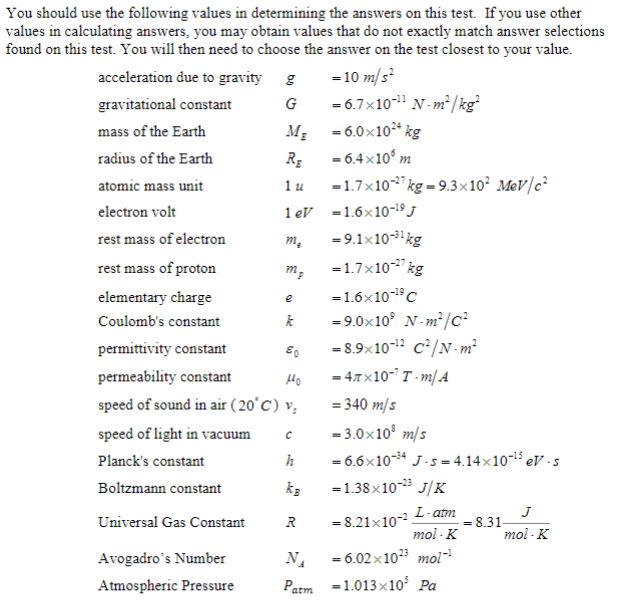
The Physics Bowl tests your understanding of physical scenarios. When preparing, it’s often more useful to practice using dimensional analysis, extreme-case elimination, symmetry analysis, and other techniques for quick problem-solving than to write out long algebraic equations.
2. Focus on Mastering “History of Physics” and “Modern Physics”
Each year, there are 2-3 questions testing things like “Who discovered the neutron?” or “Which experiment demonstrated the wave-particle duality of light?” — these are free points. It is recommended to prepare a timeline of major events in the history of physics and a constants table, and then memorize them intensively the week before the exam.
3. Timed Mock Exams Are the Only Truth
Do not just practice isolated problems. You must set aside a continuous 45 minutes to fully simulate the exam environment with past papers. Through these simulations, you will discover which types of questions waste your time, allowing you to learn “strategic skipping” during the actual exam.