 PhysicsBowl
Written during the 2026 cycle
That cycle has closed. The 2026 exam ran between 18 March and 3 April 2026, and registration closed on 23 February 2026 (extended to 25 February). As of 25 August 2026 AAPT had not announced the 2027 dates. For what is current, see registration and the competition rules.
The Physics Bowl, organized by the American Association of Physics Teachers (AAPT), is one of the world’s most influential high school physics competitions. Its flexible question styles and broad coverage, aligning well with U.S. undergraduate applications, have made it a “golden endorsement” for students aiming for physics and engineering majors. The 2026 competition took place on March 17. Based on extensive post-exam feedback and an analysis of the question-setting trends, this year’s exam showed a significant decrease in difficulty, a focus on fundamentals, and less calculation.
I. Core Difficulty Changes in the 2026 Physics Bowl
1. Overall difficulty significantly reduced; “challenge questions” disappear
Question Structure: 40 multiple-choice questions (total score 40 points), exam duration 45 minutes.
Difficulty Distribution:
Approximately 33–35 basic questions (>80%): Directly test core concepts and classic models;
5–7 intermediate questions: Require simple reasoning or combining knowledge points;
No out-of-syllabus or overly complex niche questions; the “challenge problems” common in previous years have largely disappeared.
Trend Analysis: The difficulty of the Physics Bowl fluctuates yearly, but basic questions always form the majority. The 2026 exam returned to a “solid foundation” approach, emphasizing understanding the essence of physics rather than tricky problem-solving skills.
2. Shift in Question Style: “Light on Calculation, Heavy on Principles”
Simplified Calculations:
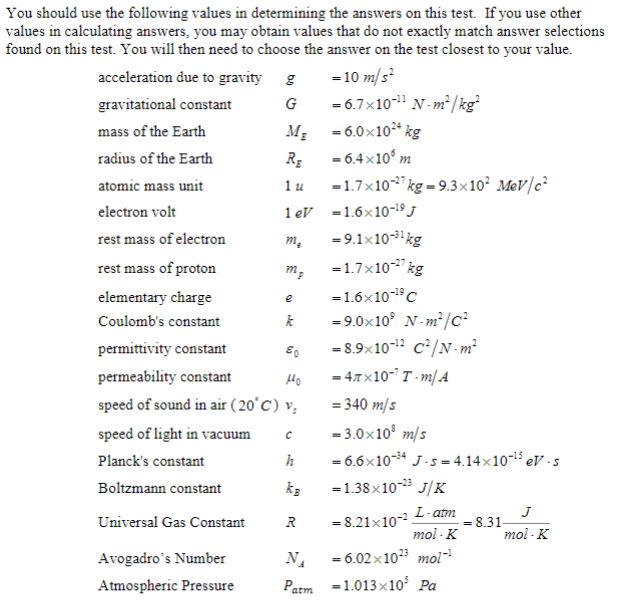
Unified take g = 10 m/s²;
Numerical values are neatly designed (e.g., mass = 2 kg, speed = 5 m/s), avoiding complex decimals;
Trigonometric functions and exponential calculations are almost non-existent; calculations can be done mentally.
High-frequency recurrence of classic models (repetition rate of similar questions >30%):
Relationship between simple pendulum period and length
Spring elastic potential energy ratios
Conservation of momentum (collision problems)
Analysis of tension in connected bodies
Overweight/weightlessness phenomenon in elevators
Conjugate method for lens imaging
Fluid continuity equation
Symmetry of vertically thrown upward motion
Increase in conceptual questions:
v-t graph slope = acceleration
F-x graph area = work
Impulse = change in momentum
Qualitative understanding questions such as volume expansion when water freezes, the relationship between stellar radiation wavelength and temperature, and characteristics of isothermal processes.
Test Preparation Advice: Thoroughly practicing past papers from the last five years is highly cost-effective! A large number of questions are direct reuse or slight modifications of classic models.
3. Astronomy and History of Physics Questions “Moderated”
The tested content consisted entirely of well-known popular science facts:
Discovery of pulsars (Jocelyn Bell)
Signal transmission method of the James Webb Space Telescope (JWST)
Germany’s Bremen Drop Tower (microgravity experiment facility)
No obscure or niche knowledge; daily reading of publications like “Physics Today” or watching science videos is sufficient to cover it.
II. 2026 Physics Bowl Score Cut-off Estimate
Due to the overall decrease in difficulty, the average score of test-takers is expected to rise, leading to higher award cut-off scores.
| Score Range | Estimated Award | Value / Application Strength |
|---|---|---|
| 38–40 | Global Top 100 / Division 1 Top 1% | Can be directly highlighted for applications to top-tier schools like MIT, Caltech |
| 35–37 | National Gold | Highly competitive against a strong international field |
| 30–34 | National Silver | Mainstream target for Top 50 UK/US universities |
| 25–29 | National Bronze | Academic bonus for safe choices |
💡 Comparison Reference (Recent Actual Cut-off Scores):
2025: Gold Award Cut-off ≈ 34 points
2024: Gold Award Cut-off ≈ 32 points
2026 Gold Award Cut-off expected to rise: 35–36 points.
III. Post-Exam Planning Advice: Accurate Positioning by Score Range
| Score Range | Recommended Actions |
|---|---|
| <30 points | Gaps in knowledge system or insufficient problem-solving speed. Suggestions:
|
| 30–37 points | Possess the ability to tackle higher-level competitions. Suggestions:
|
| ≥38 points or perfect score | Already possess top-tier academic potential. Suggestions:
|